Search
What are the recent initiatives at KAFD and how is it enabling the smart city development in Saudi Arabia and the wider region?
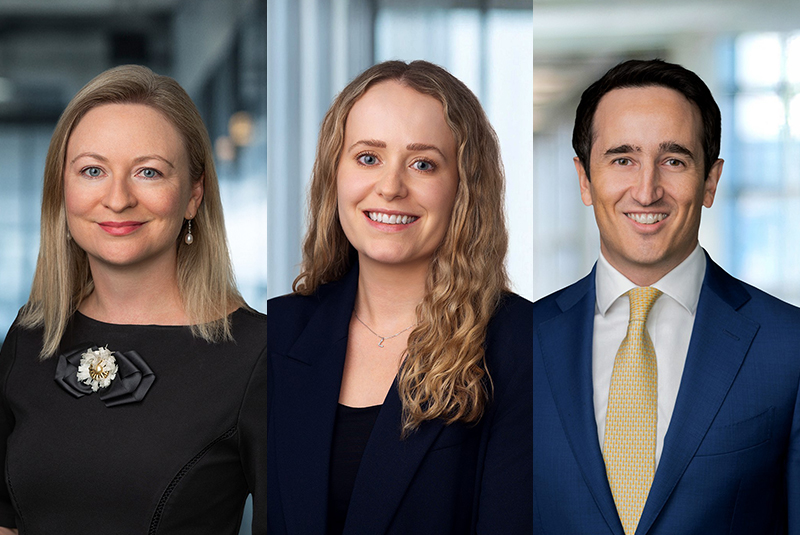
Gautam Sashittal: The country’s first vertical city, KAFD has transformed urban living, changing the way communities live, work and play. KAFD was conceived in 2006 and today, it is close to delivering nearly all the 95 buildings, spread across a land bank of 1. 6 million square meters of real estate.
We have a vibrant residential community and more than 200,000 square meters of retail space. And we’re getting some world-class fine dining locations within KAFD, which is adding to the buzz. We are soon completing the first three of our fairly large portfolio of hospitality assets and the fifth asset class comprises conferencing, entertainment and so on.
KAFD aims to be a 24/7 business and lifestyle destination and a definitive business ecosystem that feeds on itself.
It has a lot of initiatives to bring the community together and offering them several lifestyle options. Here smart city infrastructure and experience is paramount. Some of our enablers for this experience include the introduction of smart city navigation systems, the adoption of a digital twin facilitating crowd management, safety and security.
KAFD’s smart city mission is anchored in complete district automation, deploying advanced city management solutions, and an ongoing commitment to enhancing operational efficiency. Recent innovations include a smart parking app that enables employees and residents to reserve parking spots through their smartphones effortlessly. Additionally, KAFD has partnered with Google Maps to leverage z-axis vertical location technology, providing visitors with improved navigation within the district, including mapping the vertical elements around buildings.
As a region, we are looking at all of the national visions that small cities are delivering including best-in-class user experiences, enabling sustainability driving operational efficiency at a district level which is paramount to achieving the net zero goals that we’re driving for at a country level, at a regional level and at a global level.
Simultaneously, it is important to question how to create a cost model that helps deliver on the aspirational targets while maintaining a sustainable district.
Please tell us about WiredScore’s work in the region, how it is adding value to the smart city concept, and the parameters assessed in the SmartScore certification.
John Hilliard: With WiredScore’s first anniversary in the region approaching, we have amassed close to 90 buildings that are either certified or undergoing certification. That’s nearly 30 million square feet in total, spread across the UAE, Qatar and Saudi Arabia. We have a number of different schemes being certified, from landlords (such as KAFD) and developers looking to objectively promote their best-in-class buildings, all the way through to deep retrofits that are looking for guidance, frameworks and consistency to make sure that they’re investing wisely in technology to deliver the right outcomes, both for their occupiers and for their business in terms of sustainability and operational efficiency.
SmartScore certification can now be achieved at two levels: the building-level smart score certification, which enables the development and operation of best-in-class smart buildings; and now SmartScore Neighborhood, which is what we’re doing here with KAFD and looks at how you take those outcomes and bring them to life at a district or masterplan level.
SmartScore Neighborhood certification is centered around four principal outcomes - the best-in-class user experience, meeting exceptional levels of sustainability, using technology to deliver cost efficiency, and delivering future- proofing solutions leveraging smart technology.
In order to achieve a SmartScore Neighborhood certification, the scheme needs to first meet nine core criteria, which range from network infrastructure through to cyber security, energy monitoring to the instigation of, and a smart strategy.
From there, the scheme must meet 11 of a further 18 additional criteria, such as air quality monitoring, mobility as a service, wayfinding, and neighborhood alerts. This allows owners and operators to deliver the essential functions of a smart district, but to also differentiate themselves from one another with a variety of additional features.
KAFD is the first urban development in the EMEA region to earn the SmartScore Neighborhood Pre-Certification status, which means it has met all of the minimum criteria and will now go through the full evaluation.
It is a very early manifestation of what the Saudi Vision 2030 is trying to achieve and a real trailblazer in creating resilience data insights and user experience scale.
In terms of the certification’s broader application, we see this becoming a cornerstone of the development of smart cities and districts across the region, principally because it takes the smart ambitions within the national visions and provides a roadmap for implementation, as well as objective verification for occupiers, investors, and other stakeholders that the scheme is indeed, smart.
Why is WiredScore’s certification important for developers and asset owners and why should they strive to receive that certification?
John Hilliard: Technology underpins our daily lives in ways that we could not have forecasted. And, developers or landlords of commercial or residential assets have a fundamental challenge, that they are increasingly being pushed to design technologically-enabled assets.
Certification is a very simple way for landlords to create focused frameworks around technology, effectively benchmark themselves against other buildings in the market, and succinctly communicate the technological features of a building to current and prospective tenants.
Recent research from Moody’s shows that on an average, globally, WiredScore certified buildings will see upwards of 5% increased rental yields and tenants will stay an average nine months longer. We also know from our own regional research that more than 55% of occupiers would be happier in their space with increased smart building and ESG+R credentials, so it’s an easy win for landlords looking to objectively demonstrate their capabilities to existing and prospective tenants.
What is your outlook on the overall growth that is happening in Saudi Arabia and how is KAFD enabling investments into the commercial real estate sector? What do you see is the trajectory of growth for the KAFD?
Gautam Sashittal: Saudi Arabia is the 19th largest economy in the world and the largest in the MENA region. It’s the fastest growing among the G20. For example, the Saudi economy grew by 8.7% in 2021.
At KAFD, we already are delivering 1 million square meters of state-of- the-art office spaces. Now, that means, we get the perfect blend of government and private sector, local and international business.
We have several international occupiers, including large strategy consulting firms. Three out of the big four accountancy firms will be moving into KAFD as well as a lot of legal firms and major Saudi banks. In the government sector there is the PIF, one of the largest wealth funds has already moved in. These businesses, in turn, fuel economic growth by creating job opportunities and driving innovation. Our commitment to sustainability further aligns with the Kingdom’s economic objectives, as we focus on green practices and efficiency to reduce our environmental footprint while supporting sustainable economic development.
So, this basically creates the business ecosystem which will feed on itself. As 100,000 people are expected to live and work in the district by 2025, KAFD will also bring in an international workforce to work alongside the Saudi workforce. It’s not just a business ecosystem, we’re building lifestyle experiences.
That’s how we contribute to the growth of the economy, and we’ve become a central part actor in achieving the Saudi 2030 vision, whose three key objectives are really to create a thriving economy within a vibrant nation with a vibrant society.
KAFD will continue to grow, and new asset classes will be added to complement the asset classes that already exist, which include more retail and residential options, all of which will be highly complementary to the large component of office spaces in KAFD.
Also, we are investing a lot into not just creating a smart city, but into sustainability and creating green spaces, to reduce our environmental footprint while supporting sustainable economic development.
We have several sustainability initiatives that we are currently activating, such as recycling water, and an automated waste collection plant.
KAFD is swiftly progressing to be the definitive place to live, to work, to play, a business lifestyle destination, not just in the region but globally, too.
King Abdullah Financial District Saudi Arabia smart cities WiredScore SmartScore Neighborhood pre-Certification