Search
There is no question that the rapid development of the Internet of Things (IoT) is transforming several aspects of our daily life. Recently, Fortune Business Insights report, titled ‘Internet of Things (IoT) Market, 2020-2027’ stated that the global IoT market size is projected to reach USD 1463.19 billion by 2027 while exhibiting a CAGR of 24.9% during the forecast period. As quality of life and resource management climbs to the top of the list for governments and policymakers around the world, smart cities in specific are becoming a key area whose success in achieving energy efficiency and overall wellbeing targets largely depends on leveraging IoT and AI.
Technology can transform smart cities in many ways. A recent report by McKinsey Global Institute showed that quality of life including safety, jobs, cost of living and health can be enhanced by anywhere between 10% and 30% with the use of smart city technology. When it comes to residential complexes and commercial spaces, technology can aid maintenance and smooth functioning of many aspects including security, managing footfall and energy efficiency. In addition, the use of AI and IoT is not only limited to the operation of buildings but can be leveraged in pre-construction stages. For example, drones, which are witnessing further development due to AI technology, can reach areas difficult for humans to reach and produce quicker and more accurate results. In addition, Building Information Modelling (BIM) tools and digital twins can create a model of the planned construction to enable coordination of the project before execution, resulting in great efficiency.
Here we look at the ways in which smart city technology can enhance energy efficiency through different technologies that leverage IoT and AI including Digital Twins and Microgrids and Facilities Management (FM) technology.
Smart grids
One of the major features of smart cities is the analysis and use of data that can be collected by IoT devices and sensors. These data can be used to improve infrastructure, public utilities and services, which are necessary to achieve energy efficiency targets. A new generation of low carbon microgrids, leveraging IoT technology, is transforming the design of densely populated cities and helping to operate utility systems to encourage energy efficiency. Through the Internet of Things (IoT), organizations can cost-effectively implement microgrids. Smart grids allow predictive maintenance and are and can create smaller groups from larger electrical utility grids, which provides organizations with greater control of how to optimize their energy supply. In addition, microgrids can also reduce dependency on utilities by helping cost reduction through avoiding peak usage charges. As such, smart grids are believed to have the potential to revolutionize the distribution of electricity worldwide.
Digital Twins
By means of receiving input from sensors, digital twin technology can enable urban planners to test projects and developments before implementation in the real world through real-time data. The sensors gather the data from the physical product and simulates the object in real time, providing valuable insights into performance and potential problems.
This can undoubtedly contribute to smarter and more sustainable cities. A great example is the Singapore government creating a digital copy of the city for policymakers to explore future scenarios. This will allow future changes to the city to be simulated before they are carried out. However, it also allows for other simulations such as vehicle usage and emissions. Digital twins can provide replicas of cities with a virtual model of roads, building and public spaces, it can help city planners better plan transportation systems and warn inhabitants about pollution levels and other suspected problems.
Tech-driven FM:
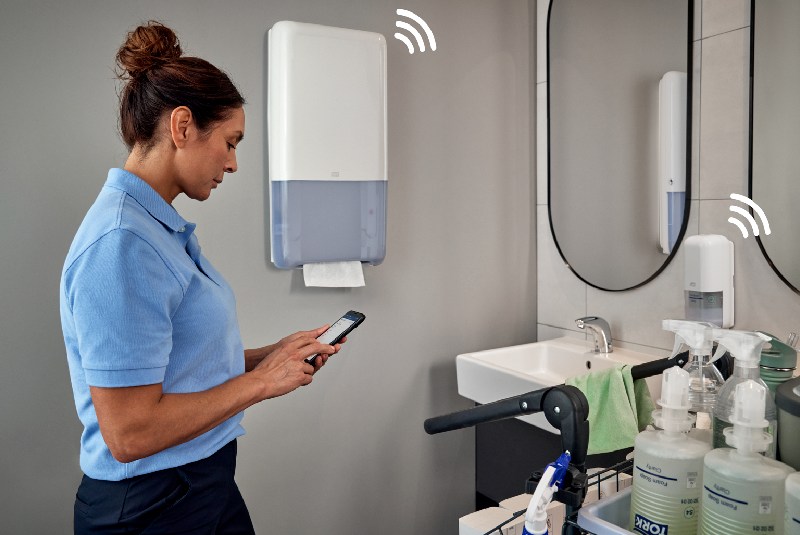
Infrastructure plays a key role in global energy consumption as buildings produce 36% of all carbon emissions globally. IoT and AI continue to shape the landscape of tech-driven benefits in FM, which enables Facilities Managers to reduce inefficiencies and greenhouse gas emissions. For example, automation built sensing technology deployed through a building management system can adjust temperature and light according to usage patterns and presence of people in the rooms. The selective use of energy enables more efficient use of energy and cost saving. In addition, one of the technologies that facilities managers can implement is the use of Radio-frequency identification (RFID), which allows for real time monitoring of people entering and leaving a building, a smart way to initiate a no carbon footprint.
As more attention has been dedicated to the great contribution of cities to greenhouse gas emissions, many cities around the world are working towards leveraging smart city technologies. In addition, the prioritisation of wellbeing in recent years is furthering this move towards efficient and smart technology. Despite the challenges that come with rapid technological developments, cities should continue to explore how to use smart city technologies to make their communities smarter, safer and more efficient.
This article is written by Professor Tadhg O'Donovan, Deputy Vice Principal, Academic Leadership, and Head of School of Engineering & Physical Sciences at Heriot-Watt University in Dubai.