Search
Customers are now most interested in the data generated by technology. They want to use their data to make faster, more accurate, and better-informed decisions. While the property industry has taken on PropTech head front during the pandemic and witnessed a significant impact on the end-to-end solutions, the region still has a long way to go.
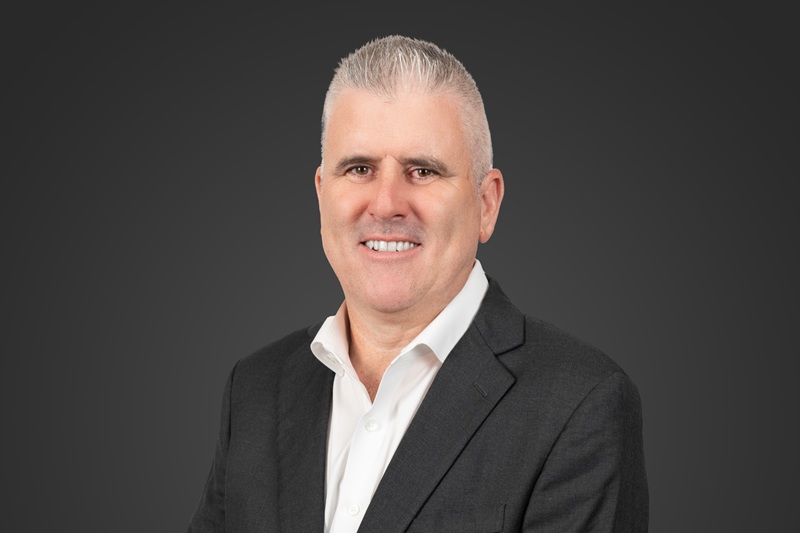
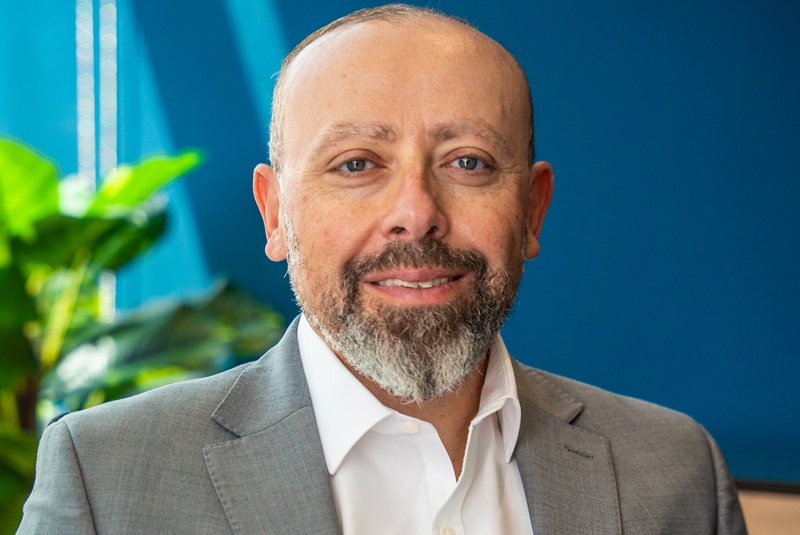
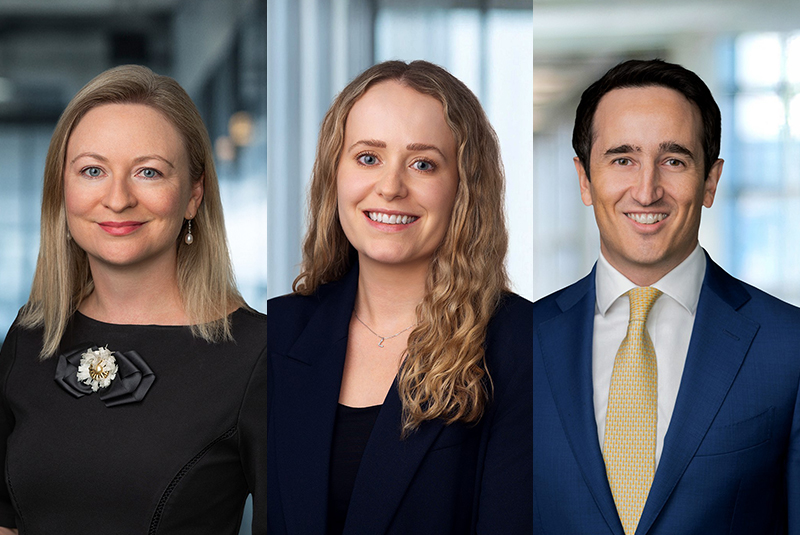
A recent panel discussion held at the Smart Built Environment Forum, moderated by Lynnette Abad, Director, Research & Data, Property Finder Group, explored the challenges one faced concerning property investment & management during the pandemic; the technologies one adapted that led to better business continuity; and the future of Property Management. The panel included - Mubarik Hussain , Director of IT, Bloom Holdings; Fadi Nwilati, CEO, Kaizen Asset Management Services; and Sergio Negri, Head of Business Technology, Dubai Holding Real Estate.

Impact
There is no doubt that the year 2020 saw significant adoption of PropTech, making it more of a necessity than a trend. However, most well-established Property Management companies, when faced with the pandemic were already prepared as they were technologically advanced. Fadi said that when the lockdown was announced their customers at Kaizen were easily able to transact, engage, and manage their transactions digitally. “And because of this, our service providers and asset managers were able to remotely manage and monitor the performance of the properties,” he added.
At the Dubai Holdings, Sergio explained how they implemented several actions including digital signatures for the sales force, issue some of the processes digitally, which requires less round trip time and less handling of papers. “So we asked ourselves how can we help to minimise this COVID impact and we started from there. In general, we implemented solutions to avoid manual contacts of forums for employees, invoices, etc. We enhanced the digital payment capabilities on a platform that we used to interact with customers,” he added. Agreed Lynnette, who explained how they at Property Finder had to reshuffle their list of priorities when the crisis hit and they had to innovate and become agile.
However, when it came to technology Sergio said that the top priority for them was to minimise the visit to the customer center. “It was easy for us to transit to remote working as we were from the IT background. However, it wasn’t the same for our colleagues, who had to handle physical papers and interact with the customers. For all those employees, this was a challenge. That is why, we enabled those solutions to minimise those visits,” he added.
Mubarik on the other hand said COVID was an interesting time as he has always been a believer in digital environments. He ensured a lot of the cloud-based technologies and solutions were already imbibed into the business continuity. “Maybe our reasoning was slightly different. We weren’t thinking ‘pandemic’ but we were thinking business continuity, cost-saving, elasticity, end-customer, and better standards for our internal stakeholders. And when the pandemic hit we were prepared as well and we flipped over relatively seamlessly without much difficulty. And I believe going forward there will be a much stronger drive towards digitising areas of the business that haven’t sort of kept up with the pace in terms of whether internally within their companies or even against their peers or benchmarked against the industry in terms of their peer companies who have digitised and now are reaping benefits of it,” he added.
Challenges
However well-prepared one was, in a situation like the COVID there are bound to be certain unpredictable challenges. Nearly everyone on the panel was from an IT background and were living in the ‘digital world’ for a while now. So making that shift was not as ‘challenging’ as it was for their colleagues from other departments. A big pain point, what the panel agreed, was the initial learning curve to adapt to the change of digital life. “This was a big disruption for people, who were not from a technology background. Property or buildings were being constructed the same way for the last 100 years, barring a few changes in the tools. When this move to digital life took place, people were afraid of the change. But post overcoming that initial curve, it has been amazing to see how people have adapted to the digital mindset,” added Mubarik.
Another challenge was the logistics like equipment and goods suppliers were affected due to movement restrictions. There was also the question of being energy efficient, reduce the movement of the number of people, and cost-cutting. “These were automatically solved during the pandemic and thanks to the IoT technology that was implemented. Now, the movement was reduced, the energy was saved, and the cost was controlled. The insights and analytics were used to predict when something will happen than visit the same place 10 times in a day,” explained Mubarik.
At Kaizen, Fadi explained that they were incidentally practicing remote management of assets towards the end of 2019. While this helped in being better prepared when the pandemic hit, what they did notice was that 70 percent of the tenants were happy immediately adapting to the digital engagements/ transactions. However, 30 percent of customers still preferred faceto- face transactions. And another challenge was the lack of proper availability of live data when it came to things like utility,” said Fadi.

Innovations
If there is one thing that took the spotlight during the pandemic was innovations. Companies were forced to think outside their comfort zone and innovate themselves to survive. The UAE has been ahead in terms of implementing technology in property management, which has, in turn, opened up many doors of opportunities. The panel did discuss the space for tokenisation, block-chain societies, and digital ID’s. On a global platform, the UAE market is accelerating at a rapid speed when it comes to adopting new technology.
However, the panel did point out that it was not just about adopting new technology but also trying out simple ones like You-Tube technology, WhatsApp integration, etc. that can make a huge difference to the business. Fadi gave an example of how they found WhatsApp integration more beneficial than launching an App. “We launched an App for our tenants and residents and we realised the usage rate of the app is about 20% and in the UAE, in general, the App activation rate is about 40%. So, we pivoted into Whatsapp integration on our platforms, because customers find it a lot easier to use. And right now our usage rate is 98%,” he explained. Agreed, Lynnette. “Sometimes it’s the easy things you don’t think of that makes a big difference,” said Lynnette.
Next steps of technology in property management
Innovation was the key to combat the situation everyone was dealing with. Many of the panelists stated how they used tools like Live Viewing using YouTube technology or even incorporating simple solutions like WhatsApp to stay connected with the end-customer. However, there were still many solutions that they see that will take Property Management and Investment to the next level.
Sergio stated that real estate in broad terms is heading towards a concept called tokenisation. This is basically to offer fractional ownership of a unit. “So, instead of investing in a single unit, you can invest in a third-of-a-unit and then create your portfolio. The legal framework is not ready yet in the region, but we are getting there. This already exists in other countries. Experiments were done two years ago and it has worked. It is something which is picking up quickly. So, I think this will also happen in the region now. How exactly? This is going to be interesting to see. For sure it will be the future especially when it comes to investment,” he added.
With so many solutions out there in the market, Fadi points out that he would like to see a future that is more integrated within these platforms. The other change he would like to see is in Big Data. “I do believe that the big data will drive the solutions for the inefficiencies we have in buildings today. The UAE, in general, has very high operating costs in buildings, which end up in high service charges for property owners and lower yield for property owners,” said Fadi.
Mubarik agreed to the points of the other panelists. And said that the ultimate change he would like to see is the benefits one can bring to the customers. “It has been interesting to see the transformation so far with solutions that didn’t seem practical a while ago is now making its way into people’s homes. I would also like to see technology getting a lot more personalised in its approach for people to find the right property for them,” said Mubarik. And Dubai is the place where one can see all of this happen and more. The panel summed up and said that the next 5 to 10 years in property management should be an exciting one.