Search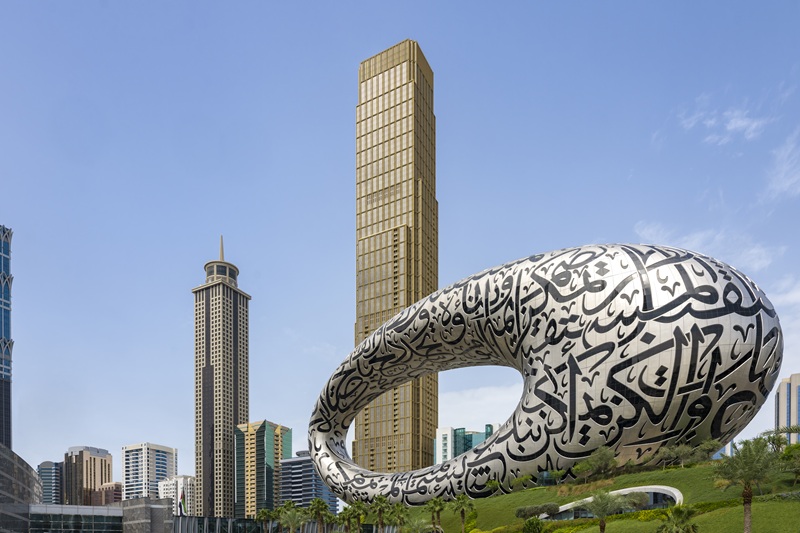
The completion of a 93-storey mixed-use tower on Sheikh Zayed Road would be significant in any year. In 2026 — a year defined by geopolitical uncertainty, supply chain disruption, and a residential market in which institutional-grade, professionally managed stock remains chronically undersupplied — the full delivery and leasing launch of H&H's City Tower carries a weight that goes beyond the architectural.
This is not a project entering a soft market. It is entering one of the tightest residential corridors in the UAE, at a location that competing developments cannot replicate, in a format that the professional tenant segment has been waiting for.
The Asset Case Begins With Location
From an asset management perspective, the first question is always locational risk. City Tower answers it comprehensively. Positioned directly outside DIFC on Sheikh Zayed Road — a two-minute walk from Emirates Towers Metro Station, 15 minutes from Dubai International Airport, and within direct reach of Downtown, DIFC, and Jumeirah — the building occupies one of the most supply-constrained, demand-resilient corridors in the emirate.
DIFC's continued expansion as a global financial hub, with a working population that demands proximity, quality, and service, creates a captive tenant profile that is both deep and durable. For asset managers evaluating long-term income stability, that locational anchor is not incidental — it is the foundation of the yield thesis.
A Supply Profile Designed for Retention
What distinguishes City Tower from a pure investment angle is its deliberate departure from the high-turnover residential model that has characterised much of Dubai's high-rise stock. Nearly half of the building's 695 residences are dedicated to three-bedroom configurations — an allocation that is, as H&H acknowledges, uncommon in high-rise development at this scale.
That decision is strategically significant. Three-bedroom homes attract a fundamentally different tenant — professionals with families, long-term residents, and occupiers for whom moving carries real friction. Combined with low-density floor plates of eight to nine homes, refined finishes, and layouts engineered for natural light and flow, the building is structured to minimise vacancy and churn rather than maximise headline unit count.
For institutional asset managers, that translates directly into lower re-leasing costs, more stable income streams, and a tenant base with a lower propensity to exit at lease renewal.
The Amenity Deck as a Retention Asset
The building's dedicated residential amenity deck — connected to the main tower via a skybridge above a nine-storey parking structure and designed by internationally acclaimed Tihany Design — is not merely a lifestyle feature. From an asset management perspective, it is a retention mechanism.
An infinity pool, padel courts, a fully equipped gym, movement studio, residents' lounge, children's facilities, and landscaped outdoor zones create a living environment that competes directly with the serviced apartment and hotel-residence segment. When a tenant's quality of life is embedded in the building rather than sourced externally, the switching cost of relocation rises materially.
Professional Management as a Value Lever
H&H's decision to manage City Tower exclusively — deploying a hospitality-led operational model that encompasses concierge services, in-home dining, personal fitness, home nursing, pet care, and smart living digital services — reflects a management philosophy that asset managers increasingly recognise as a direct driver of net operating income.
A well-managed residential asset sustains occupancy, commands rental premiums, and protects capital value over time. In a market where property management quality varies considerably, the presence of an owner-operator with a defined service standard and direct accountability for the resident experience is a differentiating factor — one that is difficult for competing buildings to replicate without the same ownership structure.
The on-site presence of a Spinney's supermarket and specialty café further reduces the friction of daily living, reinforcing the building's positioning as a self-contained address rather than simply a residential tower.
Delivery in 2026: The Timing Matters
Shahab Lutfi, Chairman of H&H, frames City Tower's proposition clearly: "Designed for professionals working in DIFC and for young families, it brings together intuitive layouts, extensive amenities and a high level of service. With less time spent on everyday tasks, residents can focus on what is genuinely important."
From a market timing perspective, that proposition lands at a meaningful moment. With long-term leasing available from June 2026 across studios through to four-bedroom penthouses and duplexes, City Tower enters a market in which professionally managed, institutionally designed residential stock at this location and this scale simply does not exist in comparable form.
At 365 metres, on Sheikh Zayed Road, in a year when the quality of assets under management has become a direct reflection of organisational resilience — City Tower is not just a building completion. It is a benchmark.
City Tower H&H Development