Search
The Covid-19 pandemic has imposed lots of pressure on business owners to cut costs with a fear of another recession globally. As facilities management expenditures are estimated to represent 10% to 25% of the total annual indirect spending in most industries with diverse operations, priorities are always given to reduce the cost of operational non-core expenditure in which FM expenditures are on the top list. FM professionals and other stakeholders are in significant need to adopt new strategies for leaner cost while maintaining the same quality level, if not better.
We can see some trending approaches in the FM industry in 2022 that can be mainly clubbed as under:
• Technology integration and introduction of robotic support
• Outsourcing and supplier consolidation
• New approach to workspace optimisation and strategy
Technology integration and introduction of robotic support
Business owners are equally focusing on technology integration that can drive a considerable amount of cost-saving. As a reaction in today’s time, service providers in real estate and facilities managers have started wide adoption for practical deployment of sensor technologies in order to deliver measurable operational benefits. Sensor technology allows a building’s assets to
communicate their operational and health status without human intervention.
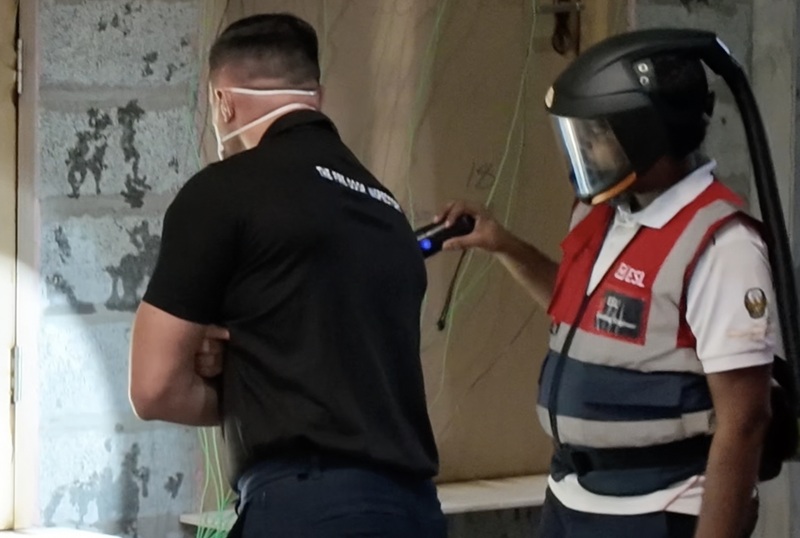
In recent years, sensor technology has been used to gather data for many aspects of any given commercial building. Those sensors can help assess desk and space occupancy, washroom usage and cleaning status as a minimum.
With the support of Computer Aided Facilities Management System (CAFM) and the Building Management System (BMS), facilities managers have access to vast amounts of data. This data can be harvested and translated into work orders or automated actions. For example, using new sensor-based occupancy data points, building management systems will adjust lights, ventilation, and temperature according to how many people are present at any given time, which will dramatically reduce energy spending. Sensor-driven building optimisation is proven to achieve savings of 15% to 20% of the total energy spent.
Integrating robotics in facilities management has also become a trend to watch growing in the coming decade. Robotic technology has started to perform frequent and repetitive tasks to minimise cost and eliminate errors. For example, robots are now used at the reception for meeting and greeting, cleaning to sweep a floor, sanitization to disinfect a space, HVAC to clean ducts, warehousing to update inventory, and security to patrol a facility. This integration is growing to a wider range of use. It unarguably will be adopted to protect humankind from hazardous tasks in general and help FM service providers perform repetitive tasks more efficiently.
Outsourcing and supplier consolidation
Outsourcing services to professional/specialised vendors is not new in the FM industry. However, more business owners are pushing to adopt this strategy to improve cost-efficiency and, more importantly, to increase flexibility for need-based resources and services.
During the crisis and especially in the time of a pandemic that lasted over 2 years, suppliers who do not possess a strong financial base to stay and face the challenges posed by the pandemic are bound to struggle to maintain the contracted services at the expected level if not even they end up closing their business and disappear from the market.
During the past two years, many industries have suffered from similar cases argued above, and many clients have realised the importance of suppliers’ consolidation.
New approach to workspace optimisation and strategy
Increasing employees’ productivity is another approach to optimising operational costs in any industry. Considering that strong engagement and a comfortable working environment will increase their happiness and improve their productivity, companies are changing strategies in
their workplace.
Remote working has been adopted more and more by many companies worldwide after the recent pandemic. Space design and assignment have become more flexible for a change as needed, reducing the required space and significantly reducing the cost. Almost every business owner has asked his stakeholders to look for opportunities to optimise the utilisation of occupied space. Many companies succeeded to reduce their occupied space in 2020 by 40%.
Additionally, coworking space is adopted more, looking at short term needs rather than long-term commitment with changes in the type of space and the period of occupancy. Real Estate companies with coworking offerings have expanded and entered new markets in the past 2 years.
What do we take from these trends?
Although all these strategies are long implemented in the FM industry, the pandemic has pushed business owners for faster adoption. For instance, outsourcing and supplier consolidation were known at the early stages of FM evolution. However, the vast adoption trending these days made the way toward integrated facilities management faster. Similarly, for workspace and technology integration, facilities managers have been working on those strategies for a while but getting approvals for the initial investment was always challenging. It has become easier and convincing with the available data and pressure to cut costs.
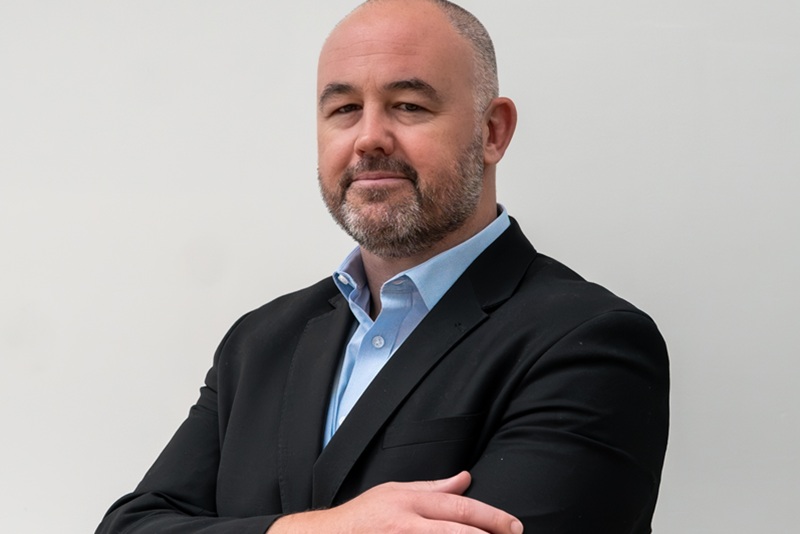
The author, Salah El Tawm, heads First Resort and the Bio Clean division for the EFS group as the Chief Operating Officer. He is a qualified MS Engineer and a certified LEED Green Associate with progressive global experience in facilities management across multiple industries.
Salah El Tawm First Resort Bio Clean division EFS group trends in FM industry 2022 trends in FM industry