Search
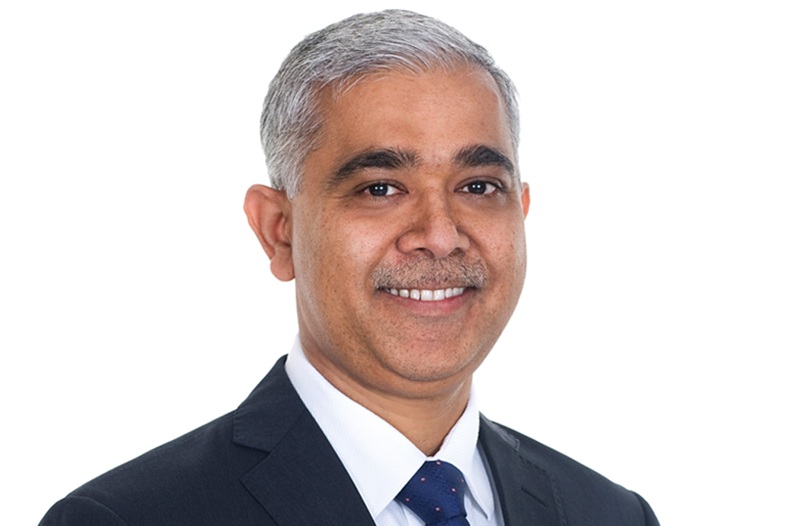
Sanjeev Bhatia, CEO of Netix Global BV, gives an insight into how one can use technology to address the management of buildings post the lockdown.
An October 2019 MarketsandMarkets report projected the Smart Building market to grow from USD 60.7 billion in 2019 to USD 105.8 billion by 2024, at a CAGR of 11.7%. Less than a year later, in the post lockdown world, the commercial real estate industry’s appetite for technology could prove to be the key factor in determining whether that growth will materialize. In fact, latest developments indicate that the sector is moving towards an accelerated adoption of Proptech, which, in all likelihood, will provide an added impetus to the ongoing Smart Building and Smart Cities revolution.
The pandemic has caused a seismic shift in the industry, revealing deep-rooted operational gaps and underscoring the need to stay ahead of the curve. Such revelations were more apparent in the case of built environments, as work-from-home and shelter-in-place measures came into effect. With no effective vaccine likely to be made available in the immediate future, such measures are set to prevail, constituting what is being termed as a ‘new normal’.
What do these circumstances mean for the management of multi-family facilities and high-rise buildings? In cities like Dubai a substantial number of people reside in multi-tower complexes, including single-function residential buildings and mixed-use hybrid facilities. Naturally, the pandemic has necessitated a crisis response, leading to community-level strategies. Although the specifics vary, there are common elements such as reduced onsite workforces for maintenance and management, increased all day occupancy, heightened security to control access, frequent deep sanitization drives, decreased use of common space air conditioning and lighting, and more. Needless to say, there is a stark difference between traditional buildings with uncontrolled energy consumption, and smart buildings which can implement measured energy usage.
Proptech and the new normal
Innovative technology enabled services and capabilities range across a broad spectrum, when it comes to the operation and management of modern properties. Adoption of technology can run the gamut from the use of Building Information Modeling (BIM) software during early design stages, to advanced future-proof net zero smart buildings. A sizable proportion of existing building stock in the Middle East is BAS-powered in some measure and the Covid-19 pandemic has starkly highlighted the advantages of automated and centralized control of embedded building automation of HVAC, lighting, security, access and other systems. Technologies such as IoT, AI ML & iIBMS (Intelligent integrtaed building managemnt solution), working in tandem, can offer facilities managers and building owners operational insights, remotely and at a granular level, while widening the scope for predictive analytics and targeted responses.
As things stand, operatives have several additional responsibilities, representing an escalation of duties compared to legacy models, until the public health crisis abates. Under these circumstances, automation is helping sustain operations despite leaner workforces and cloud technology is facilitating remote end-to-end management of buildings. Centralized unification of automation systems is emerging as a standard model, by enhancing single-window operability. Market ambiguity, due to the crisis, has added cost concerns into the mix, as the industry grapples with limitations on physical sourcing and logistics. Reducing equipment downtime, optimizing energy usage, reducing carbon footprint and eliminating inefficiencies were already compelling reasons for the adoption of technology. With the current crisis adding to the need to optimize the bottom-line of business models, the case for accelerated digital transformation has been cemented further.

Restoring consistent efficiency and optimal outcomes
Implementing digitized, connected and agile building management allows the industry to be responsive to a wider spectrum of eventualities, ensuring future ROI is more predictable and operations more resilient. In turn, these capacities translate to more stable financial projections, helping developers and building owners earmark a substantial budget to provide value-based incentives for building leesees and prospective buyers. Effectively, technology adoption can enhance brand recognition, optimize operations, and lead to differentiation in a competitive market such as Dubai, where over 20,000 residential units were completed in the first four months of 2020.
Another revolutionary technology that has promises to redefine the industry is Blockchain, which is likely to add to business by introducing unprecedented capabilities and innovations. Blockchain adds a layer of infallible security and transparency to the escrow accounts of jointly-held properties, empowering all stakeholders with secure access and reliable records. Integrated with smart metering and cloud control, Blockchain-powered escrow accounts could facilitate a seamless cycle of timely billing, alerts and payments, without the need for physical contact – in line with advisories and guidelines in the post-pandemic times.
Perhaps the most interesting development in Proptech is the smart retrofitting of existing buildings stock. The breakneck pace of innovation in the 21st century will soon render many legacy buildings obsolete. By retrofitting such buildings with state-of-the-art software solutions, their existing performance can be radically enhanced, bringing them in line with ambitious city and country wide sustainability goals and the need to optimize business bottom lines. In the post-lockdown world, implementing IoT and cognitive technologies based real estate operations and maintenance will, sooner than later, become the norm. In the wake of expectations and priorities redefined virtually overnight, these solutions are set to take centrestage and emerge as the enablers of a new normal, in the commercial real estate space.
(Author Sanjeevv Bhatia is a ceaseless and ambitious entrepreneur. He is the force behind an impressive portfolio of companies, offering cutting edge products and services across the Middle East, Europe, Asia Pacific and the USA. Managing Director and Partner at Teknoware Middle East, and CEO of ODS Global DMCC, Exenture Global BV, Netix Global BV and Exenture Films India Pvt Ltd, Sanjeevv’s urge to address unmet needs through innovation has found expression in an array of market leading ventures.)






.jpg "Neoterra Developments Marks Sell-Out Of Eira In Dubai Production City")