Search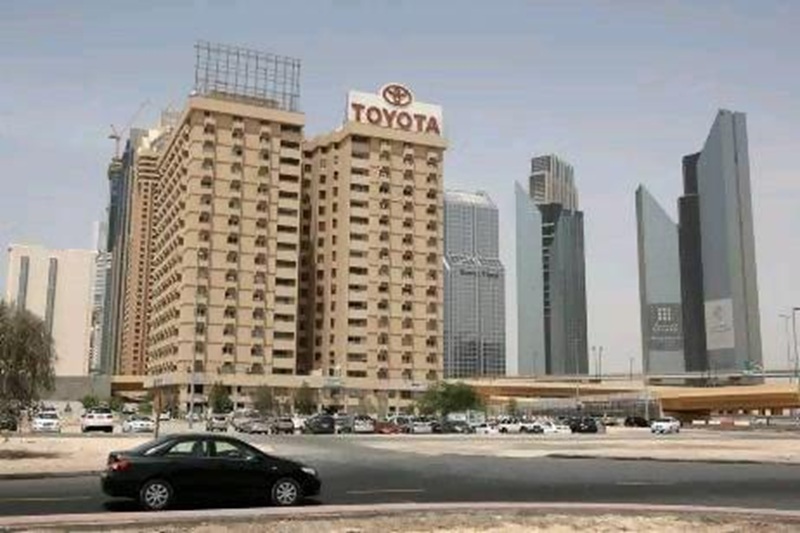
The essentials
- What: The Toyota Building, a 15-storey residential tower on Sheikh Zayed Road, one of Dubai's first residential high-rises
- When: Demolition is scheduled for 2027; tenants with valid contracts can stay until December 2026
- Who: Confirmed by the Nasser Rashid Lootah Group (NRL Group), which manages the property
- Why: Building management said the decision followed Dubai Municipality declining to approve proposed maintenance and rehabilitation works due to the building's condition.
- What's next: No replacement development has been announced
Why the building matters
Completed in 1974, the tower stood on what was then the Defence Roundabout — now the first interchange on Sheikh Zayed Road — at a time when it was one of only three buildings in the area. It has watched Dubai transform from a growing trading city into a global business and tourism hub across five decades.
Its nickname arrived in 1981, when a large Toyota sign was installed on the rooftop. The red-and-white neon billboard became a wayfinding landmark for generations of residents. The sign was removed in 2018 when the advertising contract expired, but returned in 2022 — "by popular demand," according to Toyota — restoring a nostalgic fixture of the SZR skyline.
The wind-down is already underway
Dubai Municipality is disconnecting electricity and water services in phases ahead of the demolition, according to NRL Group real estate co-ordinator Mohammed Maqdoom. Residents — many living in shared accommodation — have been posting farewell videos online as they move out. Authorities have separately clamped down on illegal sublets and partitioned units in older buildings, warning that makeshift room dividers pose fire hazards.
How controlled demolition works in Dubai
The Toyota Building joins a growing list of ageing structures cleared to unlock prime plots. Here's how the process is regulated.
A permit is mandatory — and the authority depends on location. Demolition in Dubai requires a permit from Dubai Municipality (through its Dubai Building Permit System) for most of the city, or from the Dubai Development Authority for its zones — each running its own approval portal.
Two main methods are approved. Mechanical demolition — the top-down, floor-by-floor dismantling using excavators, high-reach machines and crushers — is the standard approach in dense corridors like Sheikh Zayed Road, where neighbouring towers, the Metro viaduct and live traffic rule out explosives. Controlled explosion (implosion) is reserved for sites with sufficient clearance and carries a heavier approval burden: applicants must submit an engineering survey covering seismic and vibration impact, plus No Objection Certificates from DEWA, telecom providers and Civil Defence, on top of the standard utility NOCs required for mechanical works.
Utilities go first. As is now happening at the Toyota Building, power and water are disconnected in phases before any structural work begins — a prerequisite for the permit, alongside confirmation that the building is fully vacated.
Waste doesn't just go to landfill. Dubai Municipality has issued technical guidelines governing how construction and demolition waste is collected and transported, part of a wider push to divert concrete, steel and other materials into recycling streams rather than landfill.
The UAE holds the world record. The region has form in spectacular demolitions: the controlled implosion of Abu Dhabi's Mina Plaza towers in 2020 set a Guinness World Record for the tallest building demolished using explosives — bringing down the 144-metre structure in seconds.
The bigger picture
The Toyota Building's demolition is part of a broader urban renewal cycle along Dubai's oldest corridors, where 1970s and 1980s low- and mid-rise stock increasingly sits on land worth far more than the buildings themselves. With maintenance costs rising on ageing structures — and the municipality taking a firmer line on building condition — owners are opting to clear and redevelop rather than refurbish.
For a tower that predates the road it made famous, the end of the Toyota Building marks more than the loss of a landmark: it signals that even Sheikh Zayed Road's founding generation of buildings will be swept up in Dubai's relentless reinvention.
Toyota Dubai Municipality demolition Sheikh Zayed Road SZR







.jpg "Daikin Unveils Upgraded Experience Center in Dubai to Drive Sustainable Cooling and Infrastructure Innovation")