Search
.JPG "Beyond the Blueprint: Architects and Facilities Managers Shaping the Middle East")
The Middle East is experiencing a construction surge unlike any in its history. Ambitious visions in the United Arab Emirates, Saudi Arabia, and Qatar are not only transforming skylines but also setting new global standards for urban innovation.
According to a recent report, the region’s construction output is projected to reach $148 billion by 2030, with landmark projects like NEOM and Expo City Dubai at the forefront. Yet, as these bold plans take shape, a pressing question emerges: How can the region ensure that tomorrow’s buildings are not just visually iconic, but also practical, efficient, and sustainable for decades to come?
Increasingly, industry leaders recognize that a building’s true value lies in its long-term performance. Achieving this requires a seamless partnership between architects and facilities managers (FM), a shift from the traditional, linear approach where FM teams are brought in only after construction is complete. This outdated model often leads to operational inefficiencies and higher costs.
In fact, a 2023 survey by Facilio found that 66% of facilities managers in the Middle East spend more than half their time addressing reactive maintenance issues, a clear sign that design decisions made without FM input can have lasting, costly repercussions.
Breaking Down Barriers
Recent academic research underscores that collaboration between designers and FM professionals in the region is still maturing. A 2025 study published in Property Management reported that the most significant barriers in the UAE are the relative immaturity of the FM sector (cited by 60% of respondents) and a lack of awareness about available technologies (50%).
Encouragingly, 70% of experts surveyed believe that raising awareness about the importance of early FM involvement is key to overcoming these obstacles.
The Cost of Siloed Thinking
When FM expertise is excluded from early design discussions, the consequences can be severe. Buildings may boast impressive facades and innovative layouts, but without proper attention to maintenance access, system integration, or material durability, operational costs can quickly escalate.
Persistent challenges such as inaccessible equipment, cramped service corridors, and incompatible building management systems can lead to increased downtime, higher energy consumption, and ultimately, a reduced lifespan for building assets.
In contrast, projects that prioritize FM input from the outset are setting new benchmarks for operational excellence. NEOM, for example, is widely cited for its emphasis on interdisciplinary collaboration and advanced digital tools, including modular systems and digital twins, to support long-term efficiency and maintainability.
Technology: Bridging Vision and Reality
Digital transformation is accelerating the shift toward integrated design. The adoption of Building Information Modeling (BIM) is on the rise, especially since Dubai Municipality’s 2015 mandate for BIM use in complex projects. BIM allows architects, engineers, and FM professionals to collaborate on a unified, data-rich platform, identifying potential maintenance challenges before construction begins.
This proactive approach ensures that buildings are delivered with comprehensive digital manuals and asset registers that are invaluable for FM teams.
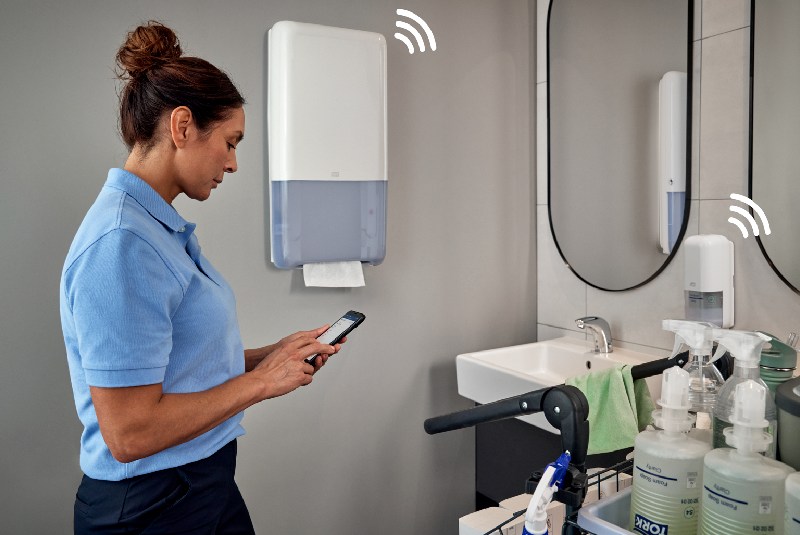
Smart building systems and IoT solutions are also reshaping the FM landscape. According to a 2024 Heriot-Watt University report, facilities managers in the UAE are increasingly leveraging IoT sensors and remote monitoring for real-time data on energy use and asset performance, enabling more predictive and efficient maintenance strategies.
National Initiatives Driving Change
Government policy is playing a pivotal role in embedding maintainability and operational efficiency into the DNA of new developments. The UAE’s Green Building Regulations require all new public buildings to meet stringent standards for energy efficiency, water conservation, and ease of maintenance. Meanwhile, Saudi Arabia’s Vision 2030 mandates lifecycle cost analysis for major developments, compelling design teams to prioritize long-term value over short-term savings.
Professional organizations are also raising the bar. The Middle East Facility Management Association (MEFMA) and the Royal Institution of Chartered Surveyors (RICS) have introduced new guidelines and certifications that promote collaborative design and FM integration, helping to professionalize the sector and align it with international best practices.
A New Blueprint for Success
The benefits of early and ongoing collaboration between architects and facilities managers are clear and increasingly recognized at the highest levels. In a region where energy costs are high and environmental concerns are growing, designing buildings that are easy to maintain, adaptable, and efficient is no longer optional; it is essential.
As the Middle East enters another decade of rapid growth, the intersection of architecture and facilities management will define the next generation of world-class developments. The buildings that endure economically, environmentally, and socially will be those conceived with a holistic vision, where every design decision is informed by the realities of long-term operation and maintenance.
The future of the region’s built environment will not be measured solely by the height of its towers or the scale of its projects, but by the intelligence, resilience, and sustainability of the spaces it creates. In this new era, the partnership between design and operations is not just a best practice, it is the foundation for lasting success.
The author Charalampos Sarafopoulos, is Executive Director at Al Shirawi Facilities Management.
Al Shirawi Facilities Management Architecture Royal Institution of Chartered Surveyors (RICS)