Search
Anyone working in the built environment knows how competitive the industry is. Every sector, be it Community Management, Property Management, or Facilities Management, a professional certainly needs that ‘X-Factor’ to grow and make an impact. CMtoday talks to experts in the industry to understand the key skill sets one needs and the tools one can use to ensure the safe and effective management of an asset!
Property Management

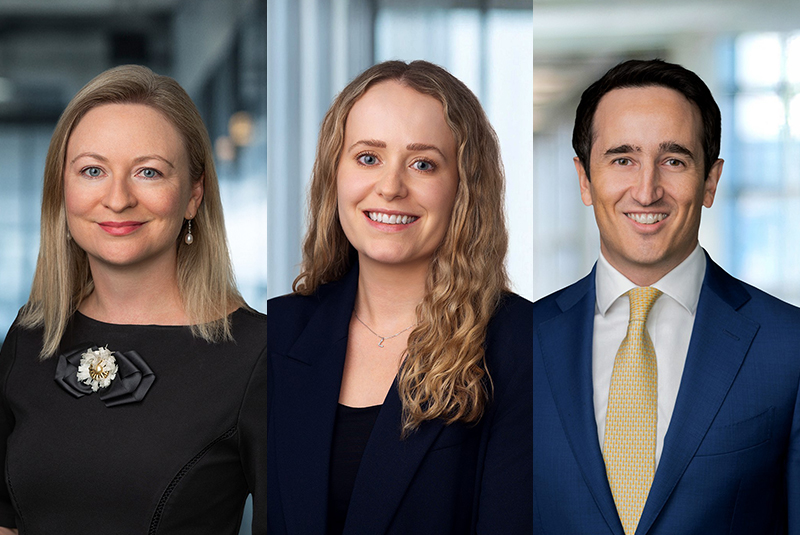
HP Aengaar, CEO at Provis
1.The ‘X-Factor’
A Property Manager’s job is both challenging, demanding, and yet a very rewarding profession. When hiring property managers, most firms would look for people who bring a wide variety of adaptable skills to the table, be it technical know-how or soft skills.
The go-to person for queries about community policies and rules, government laws, other legal aspects, or the like for any tenant or property owner is typically their property manager – their trusted reference and advisor. Hence, he/she will need to have accurate, up-to-date real estate sector knowledge and community understanding. Additionally, technical know-how is a necessary skill set any property manager should master. For example, a property manager would perform asset inspections to determine required repairs and maintenance works. He/she should be able to identify efficiencies that would reduce running costs and know-how to keep the community entertained and enhance their lifestyle. In addition, a property manager should have good organizational abilities, be committed to continuous learning, and handle the financial aspect of the property on behalf of owners and tenants with ease.
Technology is also introduced by property management companies that transform the way owners and tenants interact with their designated property managers. Knowing the ins and outs of Tech innovations and advising clients on how best to use them is essential. With more and more transactions going online, tech-savvy property managers will have the upper hand and will be able to stay on top of their game and excel in their jobs.
As for soft skills, a property manager is also responsible for ensuring a community’s smooth and harmonious running. Whether it’s a noisy neighbour, a disagreement amongst tenants and owners, and even a dispute between owners of units property managers should know how to listen and have the ability to address and contain certain situations before they escalate to the next level, be it legal or otherwise.
Lastly and most importantly – customer service and communication skills are a must-have. A property manager will have to communicate with people from different backgrounds and each would require a tailored approach. Property Managers need to be in constant contact with property owners, current and future tenants, contractors, laborers, and service providers such as FM companies, security and parking companies, and lifestyle service providers. A property manager should have the ability to understand, listen, and empathize. Each community may vary from one another and he or she should have the capability and flexibility to understand different needs.
2.Tech Support
Using Proptech solutions supports landlords and tenants in managing properties efficiently and helps in minimizing losses. Examples are many, but there are a few that stand out and have proven to be must-haves for effective property management.
Internet powdered portals and applications which can be utilized by all stakeholders have proven popular. Be it an investor looking to buy property, a tenant wanting to book amenities or services, or a property owner looking to pay services charges – people are looking for technology-based solutions that are effective, convenient, and easy to use.
As for efficiencies and potentially lowering operating costs, adopting a cloud-based Building Management System will help in the development of logic for data analytics. It will instantly collect data, automatically detect faults, and conduct diagnostics for critical assets. This helps lower service charges through reducing energy costs, improving health and productivity, assisting with real-time surveillance, and enabling faster emergency response.
Direct digital engagement is also on the rise. The best examples are cloud-based security systems, touchless visitor management systems, contactless elevators, door controls, and thermal scanners. The adoption of digitalized systems helps property owners access their property from any part of the world efficiently.
3.Current need of the hour
Property technology is the need of the hour and it is here to stay. Despite having a reluctance to integrate technology due to concerns related to system maintenance and fear of them becoming outdated in a short period, developers and investors are now focusing on the bigger picture and about the endless rewards that can be achieved with the enabling power of technology.
Proptech is used to enhance customer service and operations, save energy, decrease maintenance costs, create efficiencies, and elevate the real-estate experience for investors, owners, and tenants. Companies are also using technology to differentiate their offerings and remain competitive.
In 2020, we witnessed the use of Proptech intensifying. During the early days of the Pandemic, it was technology that helped us stay connected and engaged, it helped people manage their assets remotely and it assisted businesses to control operating costs and create efficiencies, and companies and end-users appreciated the value of Proptech. Proptech revolutionized the real estate industry by reducing operational costs, energy utilization and made the lives of residents as well as owners more convenient and comfortable. Proptech is here to stay.
Community Management

Cameron Mehrabanpour, Head of Estates and Facility Management, Heriot-Watt University Dubai
1.The ‘X-Factor’
A community manager can stand out from the rest with risk management skills, tech-savviness, and customer-centric orientation.
Risk management skills: Community managers face an ever-changing set of challenges, which is why they should continue to provide the same attention to detail once a service plan has been created. Dynamic problems and risks can’t be tackled with one-size-fits-all solutions, so an effective community manager would be flexible to alter their services from time to time. Moreover, conducting a risk assessment and developing a response plan for all possible scenarios can greatly help community managers to be more agile and perceptive.
Tech-savviness: An efficient community manager uses modern digital tools to create additional value for their customers’ experience. For example, an ability to operate CAFMs that monitor and measure energy consumption can help cut down energy usage as well as utility bills – which ultimately helps the building owners and tenants with significant cost savings. What is certain is that today’s tenants are used to different kinds of digital conveniences. Keeping up with the latest and the most advanced PropTech tools can make community managers more competitive.
Customer service orientation: Adding value to their communities through proactive services is the hallmark of a community manager that goes the extra mile. An excellent community manager goes beyond obvious day-to-day management to create and deliver tailor-made, customer-centric services. Community managers can analyze a budget and create an affordable service plan that is bespoke and relevant to each community under their care. Poor customer service translates into poor occupancy rates in the long term.
2.Tech Support
It takes more than just a provider to keep a community functioning at its highest level. By adopting smart solutions, community managers can further enhance customer experience. Some of the most technological advancements that can facilitate community management include:
Making communities feel safer: In a post-pandemic world, ensuring health and safety has become more crucial than ever before. Organizations that have deployed the SafeZone App, for instance, can allow their residents to immediately alert the response team whenever emergency support or assistance is required.
Enhancing productivity: It is no secret that poor connectivity often results in productivity loss. Deploying Bluetooth Beacons for instance can help strengthen Wi-Fi signals for organizations with large office spaces. A strong Wi-Fi connection is now defined as a basic necessity – and can boost employee productivity and satisfaction in the long term.
Improving communication: Large-scale operational communities often struggle with a lack of communication. By deploying a resident portal, community managers can keep the doors of communication open by allowing residents to raise work orders related to maintenance, payment of bills, sending a monthly snapshot of activities to residents, work orders raised and invoices, and any upcoming events.
As people become increasingly dependent on smart technology, community managers must adapt to residents’ changing expectations to stay competitive. Smart tools/apps not only allow community managers the opportunity to benefit from operational cost savings but also enable them to achieve a higher return on investment and improved occupancy rates.
3.Current need of the hour
The current need of the hour is responsiveness; many complaints are being dealt with in a slow, unprofessional manner. Property/building owners paying high service charges are fair to expect quick turnarounds and high-quality service. This calls for more holistic solutions such as apps that track issues and give real-time feedback which in turn ensures impeccable service delivery. The degree of promptness, responsiveness, and professionalism is an indication of work ethic, attention to detail, and customer service.
Hence, establishing a successful service offering requires community managers to define what attributes they should focus on for excellence. These choices should be heavily informed by the needs of customers. Managers should determine the relative importance customers place on attributes and then match the investment in excellence with those priorities.
Facilities Management

Markus Oberlin, CEO, Farnek
1.The ‘X-Factor’
First of all, I’d like to talk about the importance of soft skills, after all, we are in the people business. Dealing with people effectively, whether they are employees or customers, is a great attribute to have. If we start with employees, good clear communication skills will motivate staff, especially if you are conveying the needs of the customer. Communicating well with our customers is also very important, especially if they are going to be confident in our ability to carry out instructions and avoid any potential misunderstanding between the required and expected outcomes. Soft skills are also important in an industry that is made up of staff, speaking different languages, from different cultures and backgrounds. To many of them English is a second language, so getting the right message across is vital.
Secondly every FM professional today should have technology and sustainability-driven personality. These two attributes are going to be essential as the FM industry moves forward. Tech-led innovation must inevitably result in cost-efficiency, however, that will not be at the expense of sustainability. Protecting the environment is not an issue up for debate, every aspect of our business must be as environmentally friendly as possible. Constantly looking at new ways to become greener, will inevitably involve technology, which is why these two elements go hand-in-hand.
As the adage goes, nothing is as constant as change and the modern FM Manager needs to be able to technically flexible, adapting quickly to new situations, being calm, confident, and able to make instant decisions, qualities that were highlighted by the pandemic. Virtually overnight, policies, procedures, and working practices, that had been in place for years, were suddenly turned on their head. FM managers will need to find a practical and creative solution to operational issues and as the industry becomes more and more digitalized, the more technical and bespoke the solutions will have to be. Although tech innovation will gradually accelerate over the coming years, the profile of the FM manager in 20 years will bear no resemblance to the FM manager today, making technical prowess, flexibility, and being receptive to new ideas, key characteristics for this position.
2.Tech Support
First of all, you would need an asset management tool. This would need to be set up with due consideration of all critical assets, including managing the availability of spare parts, as well as managing service requests, creating integrated work orders, monitoring productivity, and managing subcontractor performance.
A Building Management System (BMS) with an added feature of energy monitoring management, would also be essential. Monitoring, measuring, and analyzing a building’s performance is key to cost-effective and sustainable facility management.
AI, IoT, and machine learning solutions will dominate the way we strategize as businesses, function as companies, and operate as facility managers. For example, technology measuring footfall in a shopping mall will dictate the manpower required, where, when, for how long, and how often. Monitoring and recording access points with biometrics will manage workflows for employees and identify footfall for customers and visitors. Online and or distance learning for employees will be essential to keep up with market trends and demands, wearable technology such as smartwatches or smart glasses, will become commonplace.
3.Current need of the hour
The UAE government’s response to the pandemic has been excellent. Not only with the efficient and successful vaccine rollout, but how it has supported public and private organizations in terms of health and safety regulation and improved standards. That decisive action has managed to get the UAE economy moving again safely when many other countries in the world are living with severe restrictions or even in lockdown.
COVID has taught us many invaluable lessons, whether that’s at home, the office, a hotel, a restaurant, a shopping mall, an airport, or even public spaces. As a society, we are all far more conscious of the health and safety measures being taken within our immediate environment, whether that’s general cleanliness, air quality, or personal hygiene and space.
All of this breeds confidence and a confident public (whether local or overseas visitors) is the need of the hour. We should all be confident that besides reasonable, common-sense restrictions, we can go about our lives normally without worrying about spreading or contracting coronavirus.
As essential workers, the FM industry needs to do its part to make the general public confidence that their built environment is safe and fit for purpose.
X-Factor CMtoday Property Management Tech Support Community Management Customer service orientation Current need of the hour