Search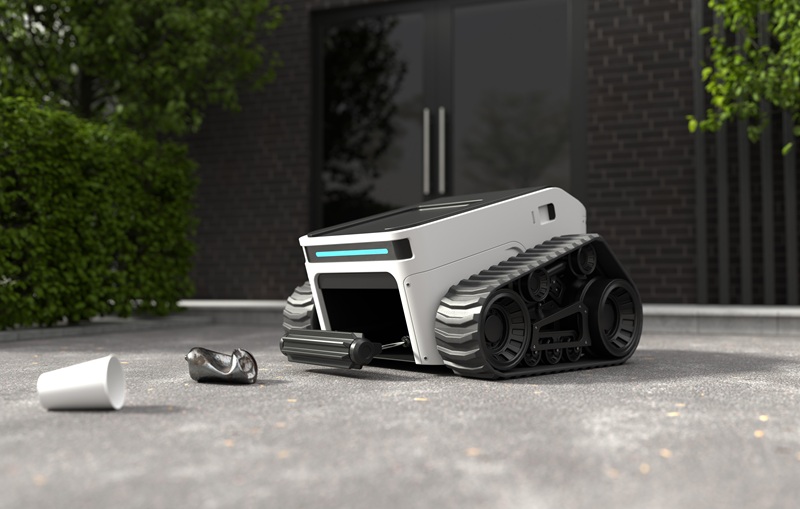
Every day, millions of people pass through airports, shopping malls and mixed-use destinations without ever thinking about what keeps these environments clean, safe and fully operational. Behind the scenes, facilities management is undergoing a transformation powered by robotics, artificial intelligence and real-time data.
In such facilities, traditional schedule-based maintenance models are no longer adequate to meet the stringent operational requirements and hygiene standards.
Managing millions of square feet around the clock requires exceptional consistency, rigorous safety standards and uncompromising efficiency. Here, the transition from labour-intensive to technology-driven service models is enabling facilities management (FM) providers, like ServeU, a subsidiary of Union Properties, to raise operational efficiency standards.
Addressing Scale and Complexity in High-footfall Environments
To address these challenges, ServeU has integrated robotic cleaning technologies across high-footfall environments, combining autonomous equipment with real-time operational intelligence. The company’s robotic portfolio has been designed for diverse environments.
For instance, ServeU's fleet includes the Leo autonomous scrubber, capable of operating for up to ten hours on a single charge, alongside the Beetle AI-powered sweeper, which combines autonomous navigation with HEPA filtration to significantly reduce airborne dust.
Driving Measurable Impact in Aviation and Retail
Robotic cleaning’s impact is most visible in aviation environments, where strict hygiene KPIs and safety considerations are critical. Within the Aviation sector, the deployment of robotic scrubbers has delivered tangible improvements in cleaning cycle times with consistent KPI scores above 93 per cent across the duration of the contract.
In retail and commercial settings, robotic cleaning reduced the reliance on frequent manual mopping, which had a direct impact on audit scores and client satisfaction ratings. Similarly, drone-assisted façade inspection and cleaning reduced the need for high-risk manual access and strengthened safety protocols for high-rise assets while improving operational efficiency.
Empowering Workforce with Robotic Systems
While robotics was once viewed primarily as a substitute for manual labour, today's facilities management industry is demonstrating how technology enhances, rather than replaces, the workforce. In reality, it is transforming how people are deployed. By automating repetitive and physically intensive tasks, employees have the ability to focus on duties that require oversight, technical skill and prompt decision-making.
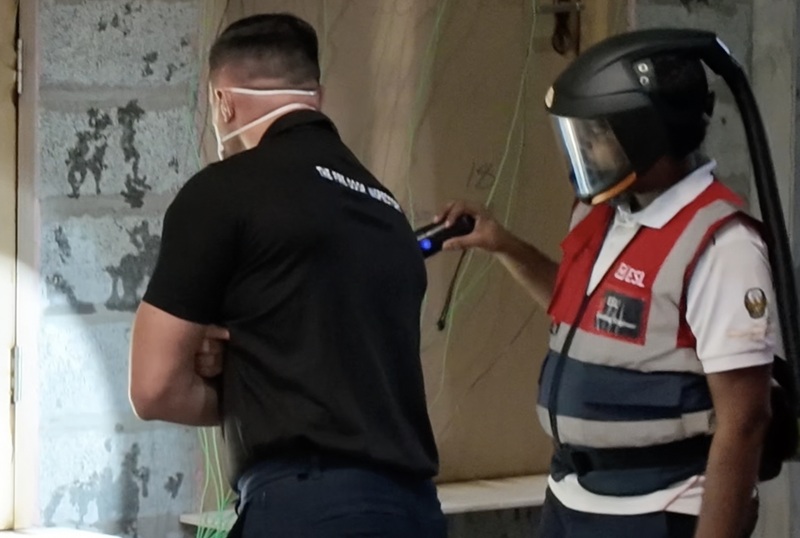
This transition is enabled through structured training at the Aibtikar Training Centre, where employees are equipped with skills in robotic operations, CAFM systems and data interpretation. Supervisors and team leaders can now monitor real-time performance data through smart devices, enabling a seamless human-robot collaboration for uninterrupted service delivery.
Meeting Changing Customer Demands
As client expectations continue to evolve, service delivery is assessed on transparency, accountability and long-term value. Digital dashboards, CAFM systems and reporting tools provide clear audit trails, offering insight into when, by whom and how spaces are maintained and to what standards.
Sustainability is no longer a complementary objective; it has become a core performance indicator for facilities management providers. Robotic cleaning has contributed to up to 80 per cent reduction in water usage while also promoting responsible chemical usage with 19.8 per cent of cleaning chemicals already replaced by green alternatives, with an ambitious target of 30 per cent by 2026. Waste management initiatives further resulted in the recycling of 8.15 per cent of 27,000 tonnes of waste.
These initiatives position ServeU, a subsidiary of Union Properties, as a sustainability partner rather than a service provider.
As buildings become smarter and customer expectations continue to rise, facilities management is shifting from reactive maintenance to intelligent, predictive operations. Robotics, AI and real-time data are enabling operators to rethink how large, complex environments are managed, not simply making cleaning more efficient but transforming it into a strategic function that supports safety, sustainability and long-term operational resilience.
ServeU Union Properties Robotic Systems