Search
The hospitality industry encompasses much more than hotel management, including food and drink services, event management, and tourism. Facility management is essential in supporting this industry in enhancing service quality through an optimised management of assets, people, and processes. A facilities management team works behind the scenes to ensure occupants' comfort, health and safety and streamlined business operations.
Specifically, in special times such as during pandemics, as we have seen with COVID-19, FM personnel took an elevated role in building intense
measures to support a healthy and safe environment. While every sector is different, the hospitality industry has seen major changes over the past few years. Historically, the hospitality industry has not been technology savvy compared to other service sectors, such as airlines, travel, telecom, and banking. FM in hospitality has now changed exponentially. The shifting landscapes of the COVID-19 pandemic brought on a new set of challenges, and the benefits of using advanced technology and the growing role of data in FM have all put a spotlight on data-driven facilities management in hospitality. FM application in hotels connects to the performance of the core business. For hospitality guests, constructed facilities form an important part of their decision to use or stay at a particular property
and are also important for the business selling their amenities and services to potential guests. Dr. Karima Hamani, Assistant Professor and Facilities Management Programme Lead at Heriot-Watt University Dubai, shares insights on the way data can support facilities management in one of the most dynamic global industries.
Faster Decision-Making Data-Driven Insights
Data-based building management systems provide data in a transparent, easy-to-understand report that benefits the FM managers. As the reports are easy to understand and filter, FM managers only need to gather crucial insights to take swift action to use the information beneficially. In addition, data-based reports improve decision-making processes supporting a quicker and shorter turnaround time. With facility management software, modern technology, and a commitment to work with evidence based approaches, FM professionals can enhance their daily functions with more efficient facility management practices. For example, in a hotel or restaurant facility, if the indoor air quality has been compromised, which will affect guests and customers - data collected can be immediately deployed to combat the situation through quick action. Real-time data generated from IoT devices, sensors, and integrated building management systems combined with digitised timely feedback help with well informed and agile responsiveness towards greater guest and occupant comfort and satisfaction.
Enhanced Collaboration
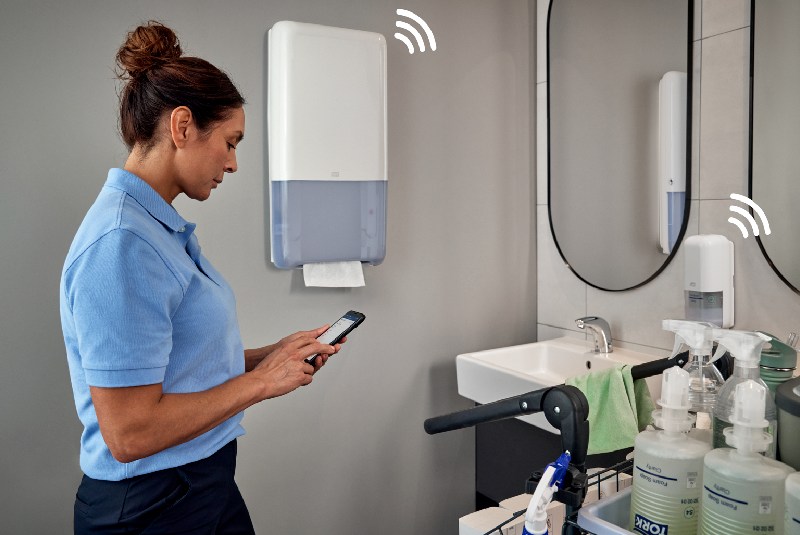
Most advanced smart technologies are interconnected within cloud-based systems. The interconnectivity allows FM companies to access and share critical data via handheld devices such as mobile phones, tablets, or desktop computers. Sharing data through secure routes is key to being on top of operations running
a building space. Most importantly, this is critical to big huge facilities with multiple checkpoints. With an interdepartmental connection in the cloud, various teams can work together and effectively adjust building-wide networks such as HVAC air and water quality systems, electrical grids, lighting, and IT infrastructure.
Proactive Checks and Maintenance Facilities personnel are consciously moving from a reactive to a proactive maintenance culture. With advanced technological tools that depend on machine learning, artificial intelligence, and the internet of things, building managers and other facilities management personnel can increasingly benefit from and leverage real-time data to improve productivity and efficiency. As a result, they can do asset management and maintenance in a predictive and proactive manner rather than react once there is a problem. This is particularly critical to
hotel operations as there is a large inflow of guests throughout the day which can cause delays in the maintenance of certain sections of the facility. So, proactive checks resulting from accurate data collection can protect the facility from major issues.
Reduce Pressure on Employees
Insights from enhanced data collection can relieve on-ground work personnel from sudden emergency requirements. With the backing of real-time data, FM managers can look out for any anomalies and issues that may emerge or have the potential of becoming full-scale operational problems in the future, thereby encouraging a corrective course before turning into a major issue. In addition, the fact that data will support the early detection of problems can be key in providing employees stress respite. In addition, guest feedback analytics allow senior management to identify areas of poor guest experience and implement targeted employee performance assessment and enhancement through a clear understanding of root causes and gap areas.
The role of Analytics in FM
While a few years ago, the potential of data was not fully recognised, in the current market landscape, data has moved on from becoming an asset to a basic requirement in the growth of an organisation. Analytics software provides the value of being connected and informed in real-time. Analytics looks for patterns in operational data to identify issues that facility managers need to know right at the beginning, which can help avert crises and enhance performance. Some problems may be outright faults, but others are deviations, trends, and anomalies – all of which have important implications on buildings that can be financial or affect occupant satisfaction and safety.
Modern-day advanced analytics software not only identifies issues but conveys that information to operators by automatically producing clear, comprehensible views – without the need to draw or assemble custom graphics. Quite simply, analytics provides operators with augmented intelligence into the operation of their facilities.
Integrating the augmented intelligence provided by analytics with operational processes to drive timely and cost-effective action will be the future of facilities management in the hospitality sector. For example, by continuously analysing energy demand and consumption data, facilities managers are able to identify consumption patterns, high consumption areas, and equipment and decide on corrective measures to be taken.
The concept of data-driven facilities is to transition from reactive operational processes driven by alarms and failures to processes supported by clear, concise, actionable information.