Search
.jpg "Synergy Series - Bahrain and Oman in Focus")
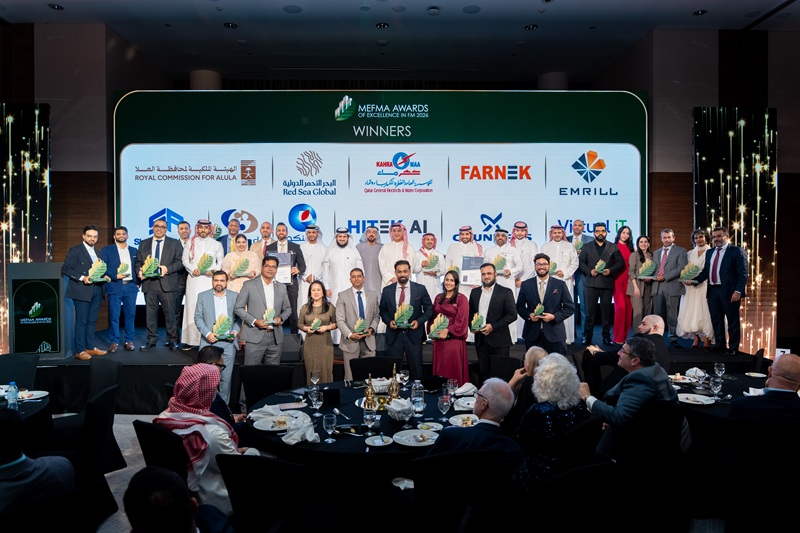
CM today, in partnership with sister magazines Clean Middle East and Waste and Recycling Middle East, recently organised the Synergy Series - Bahrain/Oman.
The expanding markets of Oman and Bahrain play a key role in the regional Facilities Management sector. The Synergy Series aimed to shed light on the key factors driving the built environment in these two countries.
Oman, driven by Vision 2040, is seeking to build a productive and diversified economy, founded on innovation and sustainable development. The country aims to diversify its sources of energy and achieve a green and circular economy by increasing environmental awareness and implementing sustainable consumption and production rules.
Meanwhile, in Bahrain, higher oil prices and strong investment in infrastructure and 5G services are expected to boost GDP growth by 3.4% in 2022. The Kingdom of Bahrain is currently prioritising infrastructure investments and the transition to a greener economy, as well as enhancing its business-friendly ecosystem through policy reform.
Insights into Oman’s FM industry
The panel discussion for Oman was moderated by David Carey, Head of KSA FM Consulting for IREP.
Though Oman’s FM industry is on an upward trajectory since the easing of Covid restrictions, it is yet to reach pre-pandemic levels.
Alex Maxton, Head of Property and Facilities Management, Savills, said, “There's been a shift from remote working to people coming back into the office and retail spaces opening, and with that has come the opening of the FM sector – in terms of allowance of working, of work orders being completed, of contractors filling PPM and such. There's also a lot more availability of staff whilst we're seeing some projects start to mobilize again. However, It is still not reaching the levels that it was doing in 2014- 2015.”
There is a need to increase awareness on the need for Facilities Management among landlords. “Oman's economy remains price sensitive. There are landlords who are very conscious of investing in FM and spend money. They don’t understand the need to look after assets and have quality services to improve occupancy levels," Maxton adds.
Cheatan Koul, Head of Operations, Tilal Development Company, echoes this view. “Whether it is service providers or landlords. Both are now more aware that FM is one of the critical elements," he says.
The sultanate is also seeing a growing dependence on computer and data-aided facilities management.
"The sector is relying more on being analytical and digital. There was a time when PPM was done in a decade old building because of the wear and tear. But now as the building is up, the assets are maintained from day one through high tech technologies," says Cheatan.
According to Haytham Elakkad, Facilities Manager, United Facilities Management, while technology-driven operations are becoming the norm, one of the biggest challenges of the current times is data security.
“The biggest challenge is having your data secured. If the company is deploying the services of a third party, it is the responsibility of the software developer to keep the data safe. Nevertheless, it is better to have servers to keep a backup for your data because if it is lost due to any problem, you lose the history of your work and the history of your financial records and that would be a big disaster.”
However, Maxton thinks there is a long way to go in terms of digitization to reach the levels of progress in other countries. “We are still very much an immature market from a digitalization point of view."
According to the experts, it is crucial for FM to be involved in the initial stages of design to ensure that maintenance works for the future are made seamless.
“Interaction with FM service providers when developments are being started is crucial. After all the assets are built, the actual FM operations begin and currently, there are a lot of scope gaps. There are lots of issues around access, problems with servicing various atriums that they've built, as well as issues around fittings and facade cleaning. However, a lot of that is changing now and I think there's a lot more being done at the FM consultancy level for both new assets and renovations of old buildings,” says Maxton.
Understand the built environment of Bahrain
The Bahrain panel was moderated by Dr. Habib Bu Jawdeh, Head of Facilities Managment, DG Jones and Partners.
In Bahrain, there is a similar increase among landlords about the need for facilities management.
"Owners now are more open to assigning the company for professional services. The owner expects better service as well as cost-saving solutions," says Oksana Konyshevska, Co-Founder and General Manager, Impact Estate WLL.
Also, over the past few years, standards have grown with regard to maintenance. "We have been approached by many owners who once, fortunately, had a bad experience with the building maintenance and have been seeking help in such an absence, putting the project in the proper state,” she adds.
Ameena Mohamed, Head of FM, Amana Property Management, agreed. "There is an increased awareness compared to the previous years, especially in the need to procure specialist services," says Amina
Ahmed Husain, Senior FM & Building
MEP Consultant, Electra Engineering Office said that FM in Bahrain is more reactive rather than preventive. "The emphasis on planning preventive maintenance and unfortunately there are no legislations to enforce PPMS on the landlords. So their buildings are suffering from neglect," he said
When it comes to digitization, Bahrain, like Oman, is slowly opening up to new technologies. But Elvira Sarakatsani, Property Manager, Royal Ambassador Properties, believes there should be a faster uptake and acceptance of technology to meet the demands of the future.
"I believe digitalization is the biggest challenge and collection of data and how we're using this data and what is the action we are taking. I will give just one example. The biggest challenge is to adapt fast to the technology. One example is that, for example, we know that in the future, drones will be used. We know that it will be used for taxes, for deliveries. We need to make sure that we have the platforms ready for the properties to be able to adapt fast," she said.
The current challenges the country faces in digitalization stems from a lack of acceptance, says Ameena.
"First thing is the budget availability. Second thing is the culture and mentality, when people don't have faith in the return of investment in certain software or certain technology. As for the budget availability, for example, for digitalization, it will be always easier to go with something integrated in house. And instead of paying for a proper facility management system for sustainability. So I believe those are the two main challenges," she said.
As the FM industry develops across the Middle East, CMtoday will continue to expand the scope and geography of its coverage to highlight and underscore the trends and opportunities shaping the built world.