Search
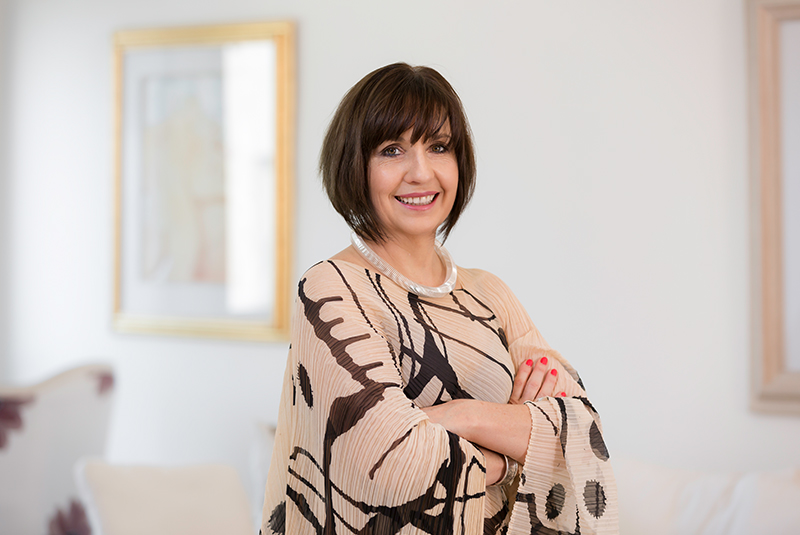
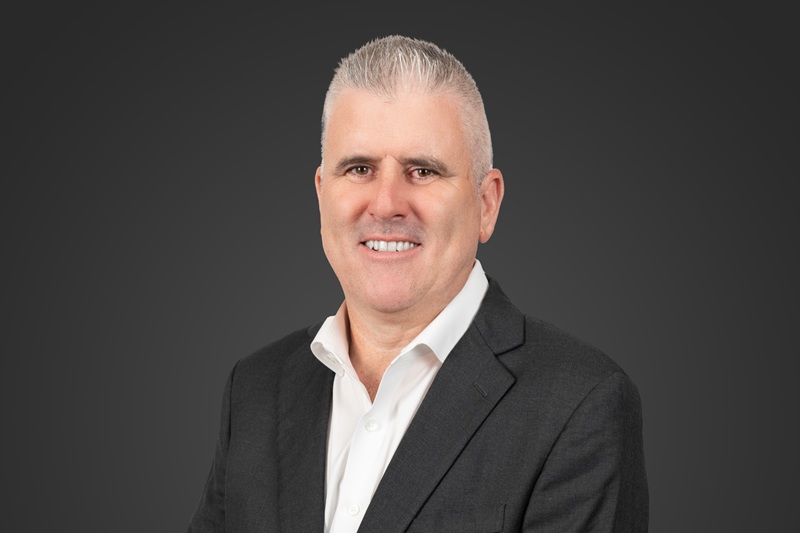
Samantha Rowles, Operations Director – Transport at Serco Middle East speaks to Marisha Singh of Built Environment about the multinational transport services provider’s range of projects in the region and the need for a gender-inclusive business environment.
Rowles is responsible for the operations and the growth of all transportation contracts across the region. This includes leading over 2,000 people within the aviation operations, air navigation services, mobility and rail business. In addition, she is also accountable for the transport sector’s profit and loss. Rowles is passionate about equality and inclusion in business and is also the executive sponsor for the Serco Inspire network – a group that champions gender diversity in the business.
What does digitization of transport networks mean for the future? “A data-driven approach is integral to the digitisation of the transport network,” explains Samanatha Rowles. She says, “Understanding and providing exceptional transportation experiences for customers is not a simple task. It’s a task that requires every player and every member in the transport ecosystem to collectively work within the overall objective of excellent customer service, and focus on fully understanding what residents and visitors want in order to deliver optimised experiences. That is why the application of technology is so important; whether it is utilizing frictionless technologies, systems such as artificial intelligence (AI) or machine learning, or using data insights to understand behaviour, technology is the enabler to helping us create world-class customer experiences.”
How are you approaching the transformation of transport networks into sustainable systems? “Environmental, social and governance (ESG) goals are driving innovation when it comes to sustainable transport systems. As awareness of sustainability grows, there has been a strong uptick in adopting policies and processes within transport networks to implement better standards and procedures to become greener and more efficient. To support with this, we launched the Advisory with Purpose offering earlier this year to help support organisations and governments in the region achieve their ESG targets via an advisory service that spans from concept to implementation. With COP28 on everyone’s minds, governments and organisations will need to ensure they are driving towards their ESG goals. This means all aspects of transport operations need to be reviewed, and so there will be an increasing focus on the use of technology, digital assessment management and operating with purpose to ensure we are contributing towards a better planet for future generations.”
Does the lack of female representation materially affect the work produced? “It is incredibly important to have a rounded workforce. Having females in positions of authority means they are able to be a role model for other females who are ambitious to take on more responsibility. Women bring different skills, ideas, and experiences to a team – this all leads to diversity of thought, ideas, and experience. Bringing together various leadership styles results in better decision-making and better results within businesses.”
“Anyone in leadership must hold a progressive diversity and inclusion agenda as part of their core responsibilities. It is our duty to everyone to ensure workplaces reflect the same world in which they operate. We need to advocate for flexibility, co-parenting, focus on delivery and a collaborative and inclusive culture.
Our aim at Serco is to create a culture that is diverse and inclusive. 50% of our executive leadership team are women, but we know we have much more to do, and so we have a multitude of initiatives to support women at Serco. Via Serco Inspire – our equality, diversity and inclusion arm - we have established a focus on women in operational leadership to transfer more women in positions leadership table. From there we are looking at how we can cascade down to support women throughout the business to achieve their ambitions.”
Would the built environment – and hence the transport networks look or feel any different if more women were in charge of designing them? “The built environment would of course be impacted by the influence of women if they were more involved in the decision-making process. We only have to look at real examples such as crash test dummies. When a woman is involved in a car crash, she is 47% more likely to be seriously injured, and 71% more likely to be moderately injured, even when researchers control for factors such as height, weight, seatbelt usage, and crash intensity. She is also 17% more likely to die. And it’s all to do with how the car is designed – and for whom. This is highlighted in Caroline Criado Perez’s book - Invisible Women: Exposing Data Bias in a World Designed for Men. Crash-test dummies were first introduced in the 1950s, and for decades they were based around the 50th-percentile male. If women had been involved in this design process, there would have been a very different and more inclusive approach to these transport safety features.”
“Our own research has shown that only 20% of roles in operations are currently held by women. Females tend to occupy less technical jobs, assuming more customer facing and soft services roles. But this cannot be acceptable; we must do better to make operational roles more appealing and also more accessible for women. There is a strong rationale for why women will thrive in operational roles, and how this can also be an asset on their journey into senior leadership. We as leaders have a responsibility to provide the opportunity and platform to facilitate this to drive inclusive strategies and decision-making processes. We need to encourage women to take opportunities in more technical roles that are traditionally male-dominated. This will allow them to accelerate their path to leadership. We need to accept that women, and also men, need more flexibility and that hours spent in the office does not equal impact and value – encouragingly the rise of flexible and remote working post COVID19 has helped address this in part.
But we still need to shift what success looks like to open up more opportunities that didn’t exist before. We must accept that we all have a role to play as leaders in bringing our businesses into a world that has evolved, and we need to put in place actions to drive this change in the world.”
What should be done to bring more women into the built environment? “In a post-COVID world, where the working environment has been turned on its head, there is a clear opportunity to use this as a positive to pause, reset, reflect and shift. Our Executive Leadership Team at Serco is made up of 50% women. Whilst I celebrate this, I also recognise we have an enormous way to go to drive real change until we reach a point where ‘this’ is no longer a conversation. Too many companies are excellent at media and public relations around gender diversity, but when you scratch the surface of the data the indications show they aren’t walking the talk.”
“To accelerate change we need to consciously provide opportunities that women and men benefit fairly from. We operate an annual global leadership development programme run by Oxford University in the UK, which is targeted at high potential leaders. We ensure the intake is fair and inclusive, representing the true diversity we strive for every day.
Furthermore, nationalisation is core to our strategy. Our extremely successful Al Masar Programme for high potential UAE Nationals, is developing a pipeline of future Serco leaders. Al Masar has seen a high volume of successful women, who have received local and global Pulse awards for going above and beyond our Serco values. We work in collaboration with other organisations, including the Ministry of Human Resources and Emiratisation (MOHRE) and the Chamber of Dubai, to drive inclusion, share best practices and continuously improve efforts to improve and evolve.
Men and women need to get aligned and commit to gender diversity been a core part of all leadership roles. By creating environments more inclusive for women, you are also creating environments more inclusive for men. Be a part of the change.”
What makes a good leader? “A good leader is someone who can create a vision within their sphere of influence that inspires. That inspiration and buy-in must then be backed up by bounds of energy to drive execution and make change happen. A good leader also has solid foundations in their purpose and the values they live by, day-in and day-out. Finally, I believe it is critical to have empathy and compassion but also stand-up and make hard decisions and own them when required.”
“To manage personalities I find DISC (D)ominance, (i)nfluence, (S)teadiness and (C)onscientiousness is critical for understanding and communication styles. All of our top 50 leadership teams have undertaken DISC profiling and training to ensure we all understand and adapt our communication styles to manage personalities and conflict in an appropriate way. To be a good leader you need a mix of DISC profiles, genders and cultures to create the optimum high-performing team and that is something I consider very carefully.”
What advice would you give to the next generation of female leaders hoping to make their mark in the built environment? “Work hard, network hard, never compromise your values and always stand up for what you believe in. No one ever grew in their comfort zone, so if you feel uncomfortable – good! It means you’re learning. Spend your privilege and help those around you achieve the impossible. Be confident and go and change the world!”
Serco Middle East Transport gender-inclusive aviation operations air navigation services mobility rail business Advisory with Purpose ESG female representation Al Masar Programme DISC gender diversity digitization of transport networks