Search
Hospitality is one of the few industries where design is tested in real time. People do not simply observe it, they live inside it.
Every corridor, transition, arrival sequence, lighting condition and spatial decision has an immediate impact on human behavior and wellness. Guests either feel connected to an experience or they do not. There is no opportunity to hide behind a compelling render, a launch campaign or industry recognition. If a space fails emotionally, psychologically or operationally, people simply choose not to return. That honesty is precisely what makes hospitality one of the most fascinating sectors to design for today.
The industry is currently undergoing one of its most significant transformations in decades. Yet many of the conversations still focus on visible outcomes: wellness amenities, branded residences, mixed-use destinations or technology integration. What interests me far more is the behavioral shift sitting underneath all of those trends. At Gensler, we increasingly view hospitality not as a building typology but as a behavior. This distinction matters because we are no longer designing hotels in the traditional sense. We are designing environments that support increasingly fluid lifestyles, where work, wellness, social connection, recovery, culture and identity coexist simultaneously.
The traditional definition of a hotel is becoming less relevant because it describes an operational category rather than a human experience.
Behavior Is Becoming the New Luxury
Perhaps the clearest signal of this shift is the extraordinary rise of the global wellness economy. According to the Global Wellness Institute’s 2026 Country Rankings report, wellness continues to outperform many traditional consumer sectors globally, with the UAE and Saudi Arabia identified among the fastest-growing wellness markets worldwide. The institute notes that spending on wellness-related experiences, services and environments is accelerating particularly rapidly across emerging markets, where well-being is increasingly influencing decisions around travel, hospitality and real estate. What is important is that wellness is no longer functioning as a hospitality category, it has become a filter through which people make decisions.
Guests increasingly evaluate destinations based on how environments support sleep, focus, restoration, longevity, emotional well-being and cognitive clarity. Wellness is shaping expectations across every aspect of the guest experience. The irony is that the most successful environments are often the least visible.
Real wellness design is not performative. It is the removal of friction, it is intuitive circulation, acoustic comfort, balanced sensory stimulation and environments that reduce stress before guests consciously recognize why they feel different.
In many ways, luxury is evolving in the same direction. For years, the hospitality industry associated luxury with material abundance. Today, the most desirable experiences are increasingly defined by simplicity, calm and emotional ease. In a world characterized by constant stimulation, scarcity of distraction has become one of the most valuable luxuries available.
The Middle East Is Becoming a Global Laboratory for Hospitality Evolution
What makes the Middle East particularly significant is that many of these behavioral shifts are occurring at scale. According to the World Travel & Tourism Council’s 2026 forecasts, international visitor spending across the Middle East was expected to reach US$207 billion this year before regional geopolitical disruptions impacted projections. Despite short-term volatility, the underlying growth trajectory reflects the extraordinary speed at which the region has become one of the world's most influential hospitality and tourism markets. The region is no longer following global hospitality models, it is increasingly creating them.
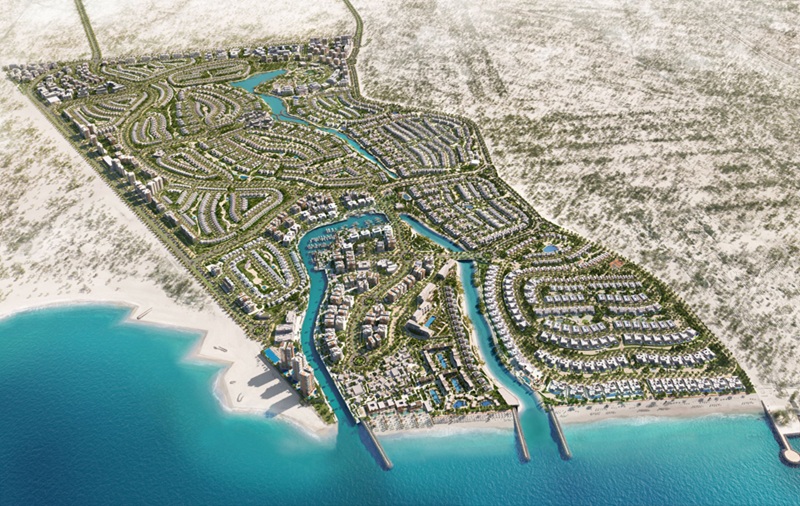
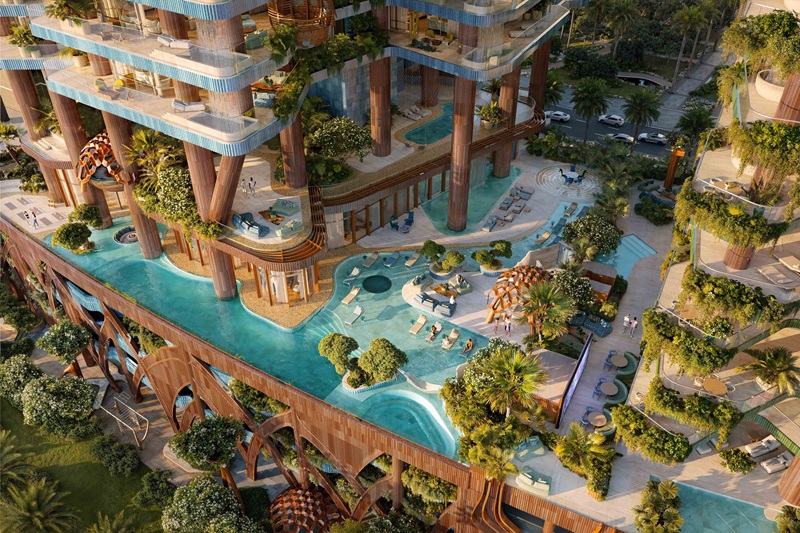
Across Saudi Arabia, the UAE and the wider Gulf, hospitality is being integrated into entirely new forms of urban development. Large-scale destinations are blending residential living, wellness, entertainment, culture, workspaces and tourism into interconnected ecosystems rather than isolated asset classes. What is emerging is not simply mixed-use development, it is a redefinition of how people experience place.
Belonging Is Driving the Rise of Branded Living
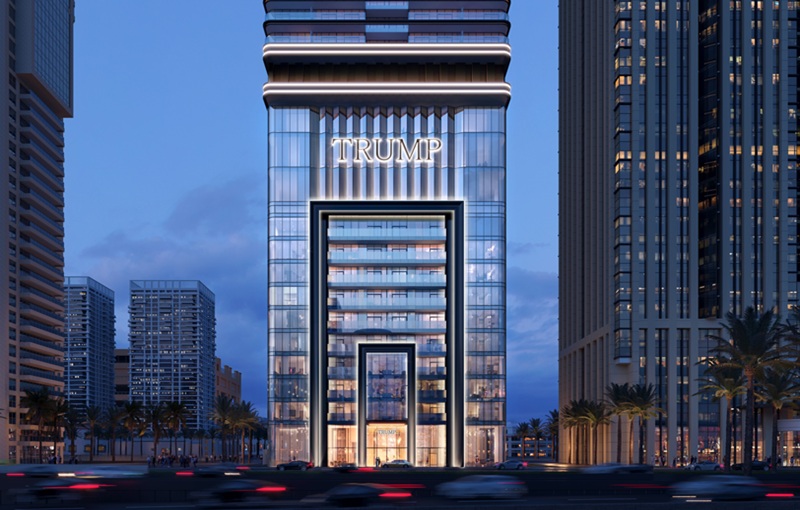
One of the strongest indicators of changing consumer behavior is the rapid expansion of branded residences. According to Savills’ 2025/2026 Branded Residences report, the Middle East and North Africa recorded one of the fastest growth rates globally, with the sector expanding by 187% over the past five years. Dubai and the wider Gulf are now among the most influential branded residential markets in the world. This growth is often interpreted as a real estate story, I believe it is actually a story about identity. People increasingly want to belong to communities, values systems and cultural ecosystems that reflect who they are or who they aspire to become. Fashion brands, hospitality groups, automotive companies and cultural institutions are extending into physical environments because consumers are seeking emotional alignment rather than purely transactional experiences. Hospitality is becoming less about accommodation and more about affiliation.
The Industry Must Stop Designing for the Photograph
One area where I believe the industry still struggles is its obsession with highly curated visual moments. For years, hospitality has prioritized dramatic arrival experiences, social media visibility and architectural statements designed to generate attention. Yet the most meaningful guest experiences rarely happen in those moments, they occur in transitions; The corridor leading to a room, the shift between public and private space, the anticipation created by movement through an environment, the moments of discovery that unfold gradually over time. These experiences are difficult to photograph, but they are often what guests remember most.
As designers, we should spend less time asking whether a space will perform well on social media and more time understanding how it performs emotionally over years of repeated use.
Hospitality Is Moving From Pampering to Optimization
Another behavioral shift shaping the industry is the growing focus on human optimization. The Global Wellness Summit's 2026 Trends Report identifies longevity, nervous system recovery, personalized wellness and performance-focused environments among the defining forces shaping future consumer expectations. While some wellness technologies will inevitably evolve, the underlying desire appears permanent. People increasingly want environments that help them think more clearly, sleep better, recover faster and function more effectively. Hotels are no longer simply places where people sleep, they are becoming environments designed to improve how people live.
Designing for Relevance
What gives me the greatest optimism is the next generation of travelers. Much has been written about Gen Z's relationship with technology, but I believe the more important story is how they are reshaping expectations around experience itself. Unlike previous generations, they do not separate digital and physical environments. They move seamlessly between the two, expecting the same level of personalization, authenticity and engagement across both.
That shift is already influencing hospitality. According to American Express Travel's 2026 Global Travel Trends Report, younger travelers are increasingly prioritizing experiences that deliver personal enrichment, cultural immersion and meaningful connection over traditional luxury markers. Similarly, Hilton's 2026 Trends Report found that Gen Z travelers are more likely to seek experiences that align with their values, support well-being and create a sense of belonging rather than simply providing accommodation.
What stands out to me is their sensitivity to authenticity. They recognize immediately when a space, brand or experience feels manufactured. They are less interested in status and more interested in relevance. They want environments that feel honest, adaptable and reflective of real life rather than idealized versions of it.
For designers, that represents both a challenge and an opportunity. The hospitality industry has spent years perfecting physical assets. The next generation is asking us to think more deeply about emotional resonance, community and purpose. They are challenging us to design environments that continue creating value long after the novelty of opening day has passed. That expectation is ultimately a positive development because it pushes the industry toward something more enduring. The projects that will matter most over the next decade will not be the ones that generate the most attention when they open. They will be the ones people continue choosing after the novelty disappears.
Hospitality Hotel Design Architecture





.jpg "Daikin Unveils Upgraded Experience Center in Dubai to Drive Sustainable Cooling and Infrastructure Innovation")