Search
In response to the current regional conflict and the closure of the Strait of Hormuz, experts across the real estate and sustainability sectors are emphasizing on three pillars for businesses operating across the Gulf.
Ground-level intelligence confirms that real estate transactions continue to be negotiated and closed, indicating that markets are still functioning. While some offshore investors may seek to liquidate assets at a discount due to incomplete information, patient capital with local knowledge is expected to hold or acquire, recognizing that real estate cannot be relocated and will remain when conditions normalize.
Q. With regional airspace closures, missile strikes on Gulf commercial districts, and heightened uncertainty across the Middle East, how are you reassessing asset values, deal timelines, or capital deployment in the region right now?
Annuj Goel, Chairman, Golden Light Group
At Golden Light, we look at moments like this through a long-term lens rather than reacting to short-term volatility. Markets inevitably go through phases of uncertainty, but the underlying fundamentals of the UAE remain exceptionally strong, from regulatory clarity and world-class infrastructure to consistent government support for economic growth.
If anything, periods like these tend to reinforce why investors are drawn to the UAE in the first place. It is a market known for stability, transparency, and strong institutional backing.
Naturally, certain deal timelines can experience minor delays due to logistics or travel constraints, but we are not seeing any fundamental shift in asset valuation expectations within the UAE market.
For us, the focus remains unchanged: building projects that create long-term value, pacing investments responsibly, and staying aligned with the broader strength of the UAE's economic and development ecosystem.
Dmitrii Gartung, Founder and CEO, OneSun
The current crisis may accelerate a structural shift with capital moving away from passive square metres toward intelligent, autonomous infrastructure — with buyers asking: "How independently can an object operate when people cannot reach it?"
In uncertainty, efficiency becomes the strongest currency. Systems that reduce operational costs and human dependency like OneSun's lightweight industrial robots (40% lighter in weight than peers, made with recycled aluminum) become more valuable, not less.
We also see a broader revaluation of jurisdictions. My own move from Europe to the UAE was driven by the search for a more dynamic, digitally mature environment. In crises, the winners are the countries and companies that build a digital nervous system fast enough to stay operational when physical infrastructure is disrupted.
Matt Myers, Assistant Professor, Heriot-Watt University Dubai
Ground-level intelligence from active practitioners in Dubai confirms that real estate transactions continue to be negotiated and closed. Markets are functioning. That is the most important immediate observation.
Any credible analysis must distinguish between two dynamics that risk being conflated in current commentary. The first is a cyclical market transition already underway before recent events. Dubai's property market had reached the crest of its current growth cycle. Supply pipelines, affordability ceilings, and moderating population growth were already pointing toward a gradual shift to a buyers' market over the coming years. This was anticipated by informed local participants.
The second is the current geopolitical uncertainty. This may affect sentiment and deal timelines in the short term, but it did not cause the underlying market shift and should not be attributed as its source.
In periods of uncertainty, real estate markets characteristically bifurcate. Some participants, particularly offshore investors receiving incomplete or delayed market intelligence, will seek to liquidate at a discount, preferring a known loss now over an uncertain future. Others, with deeper local knowledge and longer investment horizons, will assess the fundamentals and hold or acquire accordingly. History consistently rewards the latter in well-governed markets.
Real estate is unique among asset classes in that it cannot be relocated during difficult periods. It will still be there when conditions normalise. The UAE government's response merits specific recognition. The commitment to maintaining civil order and commercial activity under pressure is not merely reassuring in the short term. How governments conduct themselves during crises becomes permanently embedded in investor memory and country risk assessments. The UAE is reinforcing its reputation as a safe place to live and invest by precisely how it is behaving right now. The fundamentals that built Dubai's property market remain intact. Informed, patient capital will recognise that.
Ahmad Sultan Al Shammari, Group Head of Sales, Palladium Prime Real Estate Development
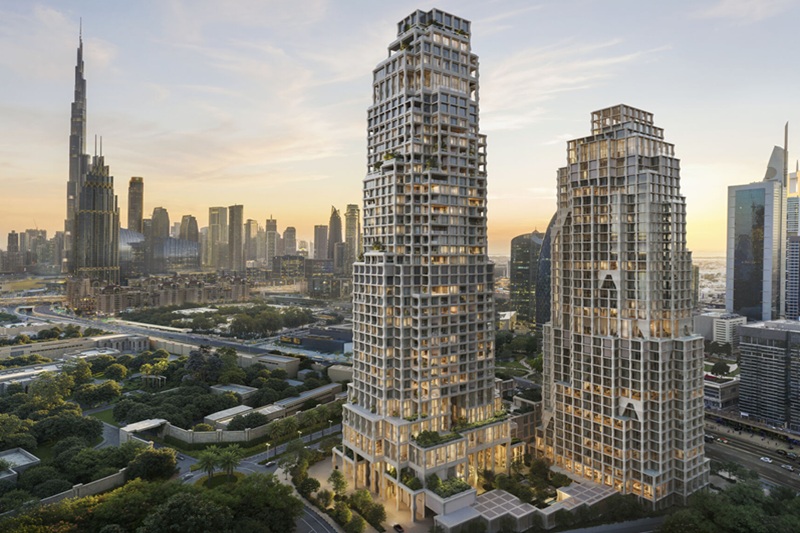
Dubai's real estate market continues to benefit from strong governance, transparency, and long-term economic planning, which reinforces investor confidence even during regional uncertainty. We are seeing buyers prioritise reliability, quality execution, and predictable delivery over sheer scale. Our mid-rise development model supports this shift: tighter construction oversight, shorter delivery cycles, and disciplined capital deployment. These factors help ensure that projects remain on schedule and aligned with end-user demand, which is increasingly important as global conditions fluctuate.
The UAE’s resilient infrastructure, including its logistics corridors and utilities, has allowed construction sites and offices to remain fully functional. However, experts warn that the region must continue investing in redundant infrastructure and alternative trade routes, such as ports that bypass the Gulf entirely
Q. Iran's strikes have targeted critical infrastructure across the Gulf. What immediate steps are you taking to protect your facilities, supply chains, or staff ?
Annuj Goel, Chairman, Golden Light Group
Our immediate priority is the safety and wellbeing of our people. During the initial announcements and declared holidays, our teams worked remotely as a precaution.
What has been reassuring is the confidence our teams themselves feel on the ground. As normal operations resumed, the team was eager to return, and today our offices and construction sites are functioning fully. Construction continues in full swing and project timelines remain on track.
The UAE's infrastructure resilience - from logistics corridors to utilities, plays an important role in enabling this continuity. Supply chains are functioning smoothly and the broader ecosystem remains stable.
Equally important is maintaining confidence within our teams. Clear communication and constant coordination ensure that people remain informed, secure, and focused. That sense of stability and collective energy allows operations to continue without disruption.
Dmitrii Gartung, Founder and CEO, OneSun
The most effective protection today is decentralisation and automation. Robots do not fear missiles, and automated production does not depend on open skies or stable shipping routes.
Our automation stack — RPA, AI agents, and fleet management software — is fully digital and location-independent. Unlike physical supply chains, software deployment cannot be blocked by closed straits or grounded cargo flights.
For staff safety, we shift dangerous or routine tasks to automated systems. People are naturally stressed during crises — they prioritise their families and safety. Machines do not. Delegating risk to robotics is not just an efficiency decision. It is a strategy to protect people.
Because oil and gas revenue supports many regional development programs, a prolonged interruption raises the prospect of delays to megaprojects and clean energy initiatives that rely on stable fiscal conditions.
Ahmad Sultan Al Shammari, Group Head of Sales, Palladium Prime Real Estate Development
Operational resilience today depends on efficient project structures and strong local partnerships. By focusing on mid-scale residential buildings, we reduce construction complexity and limit exposure to long supply chains, allowing our projects to adapt more easily when regional disruptions occur. Integrated monitoring systems and intelligent building technologies further support continuity across our developments.
This combination of scale discipline, local coordination, and smart systems helps maintain stability for both our teams and our delivery timelines.
The crisis is expected to accelerate the transition toward energy-secure and sustainability-focused development. Integrating efficient building systems and intelligent architectural layouts is no longer considered optional; it is seen as vital for lower operating costs and asset competitiveness.
Q. Energy markets are already reacting to the Strait of Hormuz closure. How does a prolonged regional conflict change your calculus on energy resilience, green building targets, or the long-term viability of projects in the Middle East?
Annuj Goel, Chairman, Golden Light Group
Events like these reinforce why energy resilience has become central to how cities and buildings are planned today. For developers, sustainability is no longer only an environmental goal. Rather, it is also about operational security and long-term stability.
The UAE has invested consistently in energy diversification, renewable infrastructure, and long-term planning. That foundation gives businesses and investors confidence even during periods of geopolitical uncertainty.
For developers, the direction is clear: projects must integrate efficient building systems, smart infrastructure, and where possible, on-site energy solutions to reduce dependency on external disruptions.
Over time, the most resilient assets will be those designed for efficiency, sustainability, and infrastructure stability. Markets that invest in resilience during uncertain times ultimately emerge stronger and the UAE has consistently demonstrated that philosophy.
Dmitrii Gartung, Founder and CEO, OneSun
While many companies still think of energy efficiency as something that is nice-to-have, the green agenda in the Middle East can easily become part of a strategy of defence and national independence.
With straits closed and energy prices rising, our long-standing goal at OneSun of reducing electricity consumption of industrial robots by up to 50% is now directly tied to national and commercial security. Reducing dependency on volatile fuel supply chains can greatly increase resilience of the projects in our region.
Dr Mutasim Nour, Director of MSc Energy and Renewable Energy Programmes, School of Engineering and Physical Sciences, Heriot-Watt University Dubai
The 2026 closure of the Strait of Hormuz has quickly become one of the most consequential energy disruptions in recent decades. According to the US Energy Information Administration analysis, with close to 20 million barrels of oil per day, around one-fifth of global supply affected, tanker movements have dropped sharply, and markets have reacted with understandable urgency. Brent crude has moved toward the $100-per-barrel range as war-risk insurance costs climbed and shipping lanes thinned out. The events have underscored just how exposed global energy systems remain to geopolitical choke points.
For Middle Eastern economies, the ripple effects are immediate. Revenue from oil and gas still supports major development programmes, from new infrastructure to real-estate expansion. While Saudi Arabia and the UAE have some limited pipeline capacity that bypasses the strait, most of the region's exports still rely on Hormuz. Any long interruption raises the prospect of delays to megaprojects and clean-energy initiatives that depend on stable fiscal conditions.
At the same time, the crisis is sharpening the case for long-term resilience. Greater investment in renewables, diversified grid systems, efficient building standards, and lower-carbon industry offers a practical buffer against future shocks. Although short-term uncertainty may slow some projects, the broader direction is likely to shift further toward energy-secure and sustainability-focused development.
Ahmad Sultan Al Shammari, Group Head of Sales, Palladium Prime Real Estate Development
Energy efficiency and sustainability have become central to long-term real estate value. Intelligent building systems, efficient architectural layouts, and strategic site selection all contribute to lower operating costs and stronger asset performance. Dubai's long-term urban strategy — with its focus on sustainability, infrastructure investment, and smart-city innovation — reinforces this direction.
For Palladium, integrating sustainability from the earliest design stages is not optional; it is essential to ensuring that our developments remain resilient and competitive in the years ahead.
Palladium Prime Real Estate Development Heriot-Watt University Dubai OneSun Golden Light Group Iran Strait of Hormuz UAE real estate