Search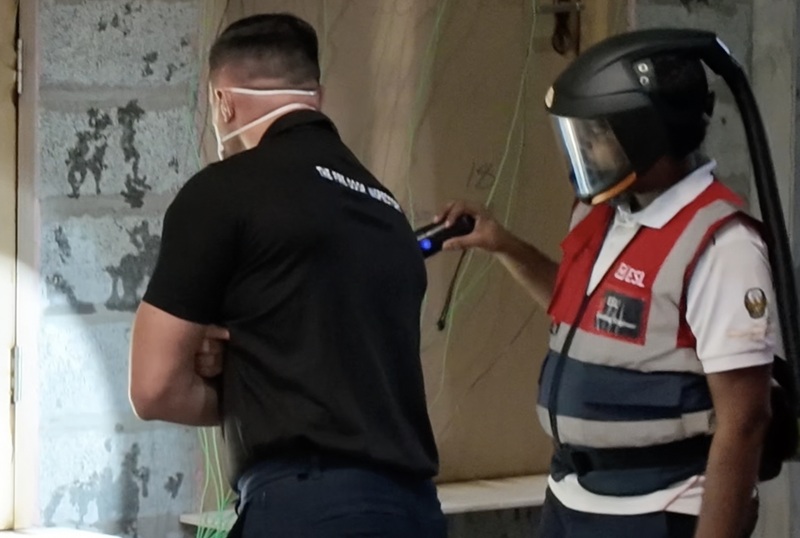
As the UAE places greater emphasis on building quality and long-term compliance through Law No. (3) of 2026, building owners have an opportunity to rethink how they approach fire safety. Too often, it is treated as something to review when a certificate is due or a regulation changes. In reality, it should be managed in the same way as any other critical building asset, through ongoing planning, maintenance and investment rather than periodic inspections.
Most capital planning conversations for a building's Quality and Safety Certificate naturally gravitate toward the big, visible line items, such as structural remediation, cladding replacement, or MEP overhauls. These are the costs that get modelled, financed, and argued over at board level.
Fire and life safety compliance under Article 7(d)(5) rarely receives the same attention. And, in my experience, that's one of the biggest oversights. Dirham for dirham, fire and life safety is one of the most cost-effective interventions an owner will ever make, plus one of the most expensive to defer.
While Article 7(d)(5) is just one line within a six-point checklist for engineering firms preparing a Technical Report, its scope and implications are far broader. Unlike structural condition or MEP performance, it doesn't describe a single, specific, inspectable component. Instead, it encompasses an entire regulatory and engineering discipline covering passive protection (compartmentation, fire stopping, fire doors) and active systems (sprinklers, alarm and detection, smoke control, emergency lighting) working together as a whole.
On paper, it seems the simplest requirement to satisfy. In practice, it could become one of the most challenging. Not because organisations are taking shortcuts, but because fire safety isn’t always viewed as the specialist, ongoing asset management discipline it really is.
Hidden defects don’t stay hidden forever
Structural cracks and failing cladding tend to announce themselves. Passive fire protection doesn't. A damaged fire door seal, a poorly reinstated fire-stopping detail or an undocumented alteration above a ceiling can go unnoticed for years, quietly reducing a building's ability to perform as intended in the event of a fire.
This is the result of normal building life: tenant fit-outs that pull new cabling through a compartment line, maintenance contractors who lift a ceiling tile and don't reinstate it to standard, changes of use that add occupant load or alter escape assumptions without subsequent reassessment. None of this is negligence in the moment. It's that accountability wasn’t clear, and gradually these gaps compound so that what was a fully compliant building at handover is not the one being inspected today.
This is also why seemingly minor defects can quickly become much larger remediation projects. Finding one non-compliant fire door or a single breach in compartmentation is often just the first indication of a wider issue. Rather than asking, "How do we fix this?", building owners should also ask, "Why has this happened, and could the same issue exist elsewhere?" Addressing the root cause early is what prevents a small repair becoming a major remediation programme.
The financial case for early intervention is clear. Aspects like fire door replacement, seal renewal, fire stopping repair, compartmentation rectification, sprinkler pipework repair, and alarm or emergency lighting upgrades are generally modest investments compared with structural or façade works. But only if they're identified early and incorporated into planned maintenance or wider refurbishment programmes.
The costs rise significantly when problems are discovered late. Reactive works often mean repeated site access, additional contractors, disruption to occupants, delays to certification and, in some cases, regulatory penalties that scale up to AED 2,000,000 for repeat violations fines under Article 16.
Where to start
For owners working with a limited budget, the best first investment is not a repair; it's a survey. You cannot cost, scope, or sequence remediation you haven't identified, and many fire safety defects aren’t visible during a routine walk-through. A thorough fire safety survey turns an unknown liability into a costed, sequenced plan.
From there, focus on risk rather than convenience. Protected escape routes, stairwells and compartmentation between different occupancies should always take priority. Wherever possible, remedial works should also be integrated into planned refurbishments, MEP upgrades or other capital projects. Coordinating works in this way is far more cost-effective than commissioning standalone remediation programmes later.
Proper record-keeping matters just as much as the repairs themselves and, with the five-to-ten-year certificate renewal cycle, the practice soon pays for itself. An owner who has been running periodic inspections and maintaining a digital record, or a “golden thread” of information, is prepared with all the evidence they need. Without that record, they are effectively resurveying the building from scratch each time, at full cost and under time pressure.
Even beyond regulatory compliance, these records are increasingly valuable. Insurers and lenders are asking harder questions about documented fire and life safety condition to manage their own risk. A digital record converts fire safety from a recurring unknown cost into a managed, forecastable one, which is the whole argument for calling it insurance rather than expenditure.
Moving forward the biggest shift is one of mindset. Fire and life safety should be managed as an integral part of a building's long-term performance, not treated as a certification exercise every few years.
For building owners, the priorities are clear - commission an intrusive survey before the Article 22 clock forces a reactive one, fold whatever it finds into your next planned works package rather than procuring it separately, and start a digital record now, so the next renewal is a formality rather than a resurvey. None of these steps require a significant investment, but together they can reduce long-term costs, minimise disruption and help protect the value and resilience of your assets.
The author, Elliott Brown, is Founder & Managing Director, The FDI Group.
Fire and life safety Passive fire protection MEP








.jpg "Daikin Unveils Upgraded Experience Center in Dubai to Drive Sustainable Cooling and Infrastructure Innovation")