Search
.jpg "Tomorrow’s Office: Have we reset the way we work?")
The COVID-19 pandemic has radically altered the decision landscape for corporate occupiers. At CBRE we believe real estate strategy must be reimagined as a connected framework to include talent, location, occupancy, and design & experience to drive successful outcomes in 2021 and beyond.

Occupiers have been forced to implement measures to make their workplaces safe and manage the return of workers to the office. They have also had to re-evaluate a range of longer-term aspects of future portfolio strategy, workplace practice and the possible shift towards a more distributed workforce pattern in which home-based working plays a larger role, and in which flexibility is vital.
The pandemic has proved that office-based staff can be very effective in working from home, whilst addressing the increasingly pressing issue of ‘work life balance’. It seems that when the novelty of the new working arrangements wore off, we realised that the collaborative, learning and social aspects of working from a business environment together with a more formal separation between home life and work life, had advantages that previously went unrecognised. The challenge going forward is in finding the right balance between office and home and for many including employers and the answer is neither wholly one nor the other.
Most employees want to work in a more balanced way between home and the office, and most employers anticipate supporting this shift. While this will result in lower utilization of the office on a regular basis, it will not mean an end to the office. Rather, it represents a fresh start that will allow company decision-makers to reimagine the role and functionality of the physical offices.
The hybrid workforce network

Many occupiers are increasingly using flexible office space as part of a programmatic strategy that allows them to maximize their long-term commitments while also minimizing their risk of having too much or too little space as headcount fluctuates.
Implementing more flexible approaches allows companies to remain nimble in the face of the current economic situation and the profound shift in workforce behaviour—both of which are still in flux. This strategy, when delivered under the appropriate structure, offers occupiers the opportunity to ensure their headcount requirement, improve their overall performance.
Flexibility will be the key to corporate resilience. Companies that adopt an agile approach to their real estate strategies will be better equipped to navigate a rapidly changing landscape around the work or office environment. When flex is not viewed as a standalone solution, but rather as a piece of a holistic portfolio strategy, it is not uncommon to realize savings of between 25% and 30%.

The reimagined workplace will be an essential part of ensuring the safety, wellness, productivity and engagement of a distributed workforce. New design standards and technologies focused on health, productivity and communication will bind the workforce together across a physical and virtual real estate footprint.
For the physical office to remain a competitive advantage, companies must manage change and drive unprecedented levels of innovation tailored to serve the needs of a more flexible workforce while supporting unified goals. This means aligning design and experience to flexible workforce needs.
Activity-based work (ABW) environments will be the new baseline for companies, as most employers adapt to meet employees’ desire for a more balanced workstyle and greater flexibility.Companies previously adhering to traditional space models likely will find themselves continuing to pay for underutilized space— a negative trend that occupiers were already addressing pre-COVID. ABW design excels at supporting a workforce that uses the office to engage in both individual and collaborative activities, but not every day.
ABW is best implemented as a free address (no dedicated seats), where employees instead report to a shared zone or neighbourhood. This “best of both worlds” approach allows employees to be effective and connected while in the office and allows employers to be efficient with their space strategy.
Changing occupier expectations are driving a unique, hospitality-inspired aspect to employee experience. An event-based workplace design allows employees to conduct most of their individual work at home and come to the office primarily for scheduled meetings and events. They spend most of their office time in meetings and social spaces. The innovations in workplace design will help companies meet the needs of an even more mobile workforce.
Now is the time for corporate real estate leaders to seize the unique opportunity afforded by the global pandemic to fundamentally rethink and reset both their own and their teams’ roles in supporting enterprise recovery and resiliency.
Multidisciplinary teams will be critical to keeping interconnected real estate decisions front of mind as companies mitigate risk and develop the future of their long-term footprint, talent strategy and employee experience. This strategic evolution will require shifting from traditional approaches to embracing new, more transformational commercial real estate models and methods, including reimagining the scope, connectedness and use of the workplace.
About the author
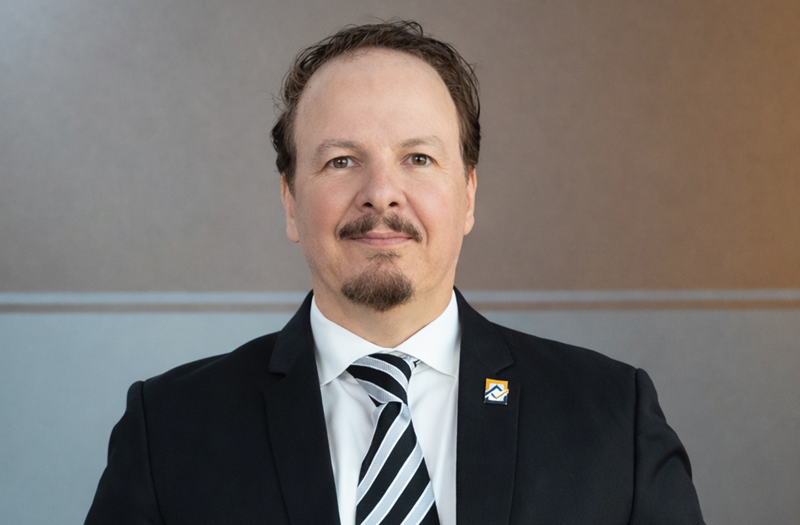
Alex Barzycki, Associate Director, Property Management
Alex has extensive knowledge of the ever-evolving client and occupier requirements, through the lifecycle of the asset, from the initial planning stage to the repositioning of an underperforming investment. Alex has six years of experience working for prestigious clients across all asset classes playing an instrumental role in the strategic management including implementation of value enhancement strategies and all aspects of day to day management to ensure the seamless and efficient functionality of portfolios.
workforce network workforce network