Search
The global spread of the virus has already caused disruptions in supply chains, unprecedented lockdowns, fatalities, social distancing and a sense of deep concern all around. In densely populated cities, where a sizable portion resides in apartments, community-level strategies are being revised to mitigate the risk. At Al Fajer FM, we believe the facility management (FM) is central to near- and long-term risk mitigation strategies, from the planning to the implementation. Here’s how responsive and proactive FM can help in controlling the virus, by implementing prudent measures.
 Preventive measures in the short-term
Risk assessment is perhaps the first definitive step towards combating the virus that FM can undertake in conjunction with owners association. Facility managers can moderate community social platforms or communication channels, ensuring open and transparent discussions between all stakeholders. Countering false information and sharing virus-related insights from reliable sources, especially within the local context, is particularly significant, at a time in which social media is propagating conflicting narratives surrounding COVID-19 and its mitigation. Airborne transmission of virus limits the scope for physical meetings and interactions, leaving virtual communications through digital channels as the preferred option.
Occupants often find themselves within the confinements of their homes during influenza outbreaks, as the situation necessitates quarantining, social distancing and self-isolation. This translates into an increase in energy usage and resource utilization. Facility managers should revisit energy management strategies and redistribute resources accordingly, in order to maintain operational sustainability. This could also mean re-evaluation of existing financial models and temporarily suspending inessential amenities. The formulation of such a community-level, evidence-based strategy, should then be followed by focused and well planned implementation.
Ensuring diligence and consistency in processes will be key
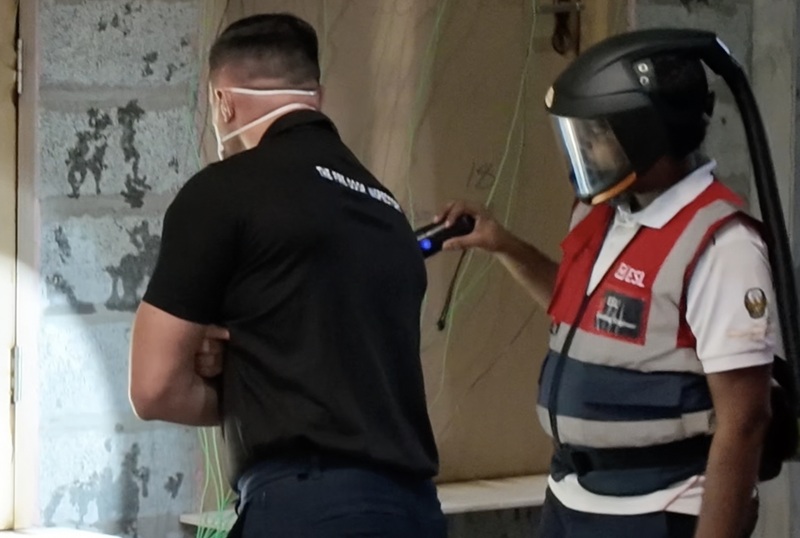
Implementation begins with raising awareness among the front-line staff. This includes information about the nature of the outbreak, the cleaning etiquettes to be implemented in response, as well as elaborate dos and don'ts and self-care routines. Any effective strategy will involve scaling of soft services, such as frequent sanitization of elevator buttons, handrails and other common touch areas. Staff should be provided with items that are effective in protecting their health while they are engaged in cleaning such high risk surfaces and objects, such as masks, hand sanitizers, gloves and other protective measures. The procurement of these items can be challenging due to epidemic-induced demand and disruptions in the supply chain. FM businesses must leverage existing vendor relationships to ensure the adequate supply and stock of these essential items.
A crisis demands rational and well considered prioritization, and HVAC systems and visitor management are areas that demand immediate attention. Preventive maintenance of HVAC filters and equipment can be conducted to avoid contamination through leaks. The recommendations issued in response to the unfolding challenge by professional associations, such as ASHRAE, are extremely thorough and form an effective basis on which FM operations can create strategies. Keeping meticulous records of visitors and travel/health information of occupants is vital in combating epidemics. To that end, conducting thermal screening at entry points and incorporating cloud-computing to give all stakeholders access to visitor logs in real time, can empower FM to readily assist health officials in tracking suspected cases and their secondary contacts, if the situation demands. Such outbreaks require facility managers to liaise with health officials from time to time, transparency is vital is vital in such interactions, but not at the expense of infringing upon occupants' right to privacy.
Long-term contingency planning
The COVID-19 outbreak has exposed the lack of contingency planning across business and industry. We are now reactively planning for a range of outcomes, from low to severe. However, with a good contingency plan that includes a list of case scenarios and plausible outcomes, panic can be replaced with preparedness. Facility managers must undertake periodic deep cleaning and continue to keep meticulous visitor logs, with or without on-going concerns of a virulent outbreak, as a preventive measure. Strategizing and innovation to achieve net-zero energy, which ensures operational sustainability in the face of unforeseen calamities, should also be part of long-term FM focus.
Facility managers must spearhead the replacement of legacy systems whose presence undermines timely and effective measures in the event of a lockdown. Especially as increasingly widespread availability of competitively priced state-of-the-art products and digital retrofits further incentivizes the need for greater absorption of technology in facilities.
Every pandemic, every catastrophe and every war in history has changed the course of humanity for the better. Every challenge begets a change, and there is almost always a lesson to learn. Managing this change therefore becomes a crucial socio-economic imperative. Today, the world needs effective change agents across industries. In the built environment, facility managers need to step up and embrace this challenging role wholeheartedly, through a combination of clearheaded strategic imperatives and diligent implementation.
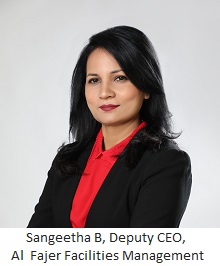
(The Author, Sangeetha B, Deputy CEO, Al Fajer Facilities Management)