Search
RS MALLS IN THE REGION HAVE BECOME MORE THAN JUST A PLACE TO SHOP. ENGIE COFELY SHEDS LIGHT ON HOW ONE CAN EFFICIENTLY MANAGE THE RETAIL ENVIRONMENT THROUGH A LESSER SPOKEN ABOUT MODULE BUT DEFINITELY A MORE EFFICIENT ONE – RELIABILITY-CENTERED MAINTENANCE
As governments commit to sustainability and critical industries develop, the need for greater skills, innovation and industry based solutions is inevitable. Armed with a forward thinking approach, the newly rebranded - Cofely Besix to ENGIE Cofely rightly brings with it international capabilities with local expertise, in order to add value to help clients develop their facilities in a more sustainable way. ENGIE’S prime position in the Middle East in the provision of power, district cooling, water, renewables, facilities and energy management services provides a unique platform to deliver innovation to industries and provide efficiencies to communities and city infrastructure. Vincent Montanet – Chief Business Development Officer (CBDO), explains, “The application of new outsourcing models are a must in the region as the services market is currently being driven down through a reliance on price driven services rather than long-term value services, and the growth of client organisations channelling work to their own service entities limits the innovation progress driven by competition.” “We are going through a cycle which I strongly believe compromises quality as the value of competition is currently undermined, we need to bring international skills and solutions to improve our industry regionally,” adds Montanet.
The team has always believed in a vision to bring forth more efficient modules and innovation that are suitable for their clients in specific sector environments. Shedding light on the retail environment, a module that is not often spoken about in the market but is definitely worked well in all their retail projects is the ReliabilityCentered Maintenance (RCM).
RCM – What, Why, When
Reliability-Centered Maintenance (RCM) was introduced in the 1960s within the aeronautics sector, and the combination of cost-effectiveness and risklimiting makes the RCM strategy quite popular in other industries as well. The setup process of RCM takes a bit more time as additional reliability engineering is required to run through the various steps of the program, however, once it is in place it makes the operations much easier for all stakeholders involved.
At large, RCM is a strategy that optimises scheduled maintenance activity whilst ensuring performance of critical assets. Each asset or asset type is studied to identify the potential failure modes and the maintenance techniques that can be applied to either prevent or identify potential failure before it occurs, so effective maintenance can be applied only at the point in time that it is required. This prevents over maintenance of assets and focuses the correct maintenance based on the criticality of the asset.
This will deliver the optimum balance of maintenance types:
• Preventative/planned, traditional-period or metered-driven maintenance intervention
• Predictive, measurement to identify potential failure to enable maintenance intervention before the point of failure
• Corrective maintenance requirement as identified by preventative or predictive inspections
• Reactive maintenance, run to fail repair of a failed asset
Hence, when we talk about critical environment maintenance techniques, we generally do not associate it with retail and malls. However failure of assets or reduced performance directly affects revenue, be this through enforced closure of retail space, a reduced retail experience affecting reputation or increased operating cost; all customers would consider their environment critical to their success.
When it comes to the retail environment, Graham Easton, Operations Director points out, that the malls have become more of a social experience and entertainment destination than just a shopping destination. So for maintenance this means extended operating hours and the complexity of the attractions and equipment required. It also raises the importance of ensuring the optimum environment through the performance of critical assets, and that is when applying the RCM module provides more efficient and sustainable results. FM strategies that focus on equipment performance and reduction of failure therefore benefit all customers but more so where failure affects their delivery of core objectives. If we look at the evolution of maintenance techniques we can identify an increasing level of sophistication.
“Whilst facility management service providers can invest in the people, skills, influence regulation the market requirement to force us along this journey must be customer driven. Across the region there is a wide variance in customer understanding on how to optimise cost through asset management,” says Easton. He goes on to add that the listed primary tier developers have shareholders to satisfy and they must deliver strategic asset management. “This diversification across the market leads to a wide variance in acceptable maintenance standards, compliance and safety,” adds Easton.
ENGIE Cofely adopted the RCM approach from the start of the company's operations in 2008 the Middle East. In fact, they implemented it in their very first project - an iconic and regional landmark and a record-breaking development which is operational 24hours and 7days a week to host its occupants and entertain its many admirers on a daily basis, therefore it is a very critical asset. “The RCM approach was embedded as it simply makes sense, both technically and commercially. The main focus of RCM is on equipment reliability when defining preventive maintenance activities and on maintaining design reliability. During the mobilisation stage, tools such as FMECA, decision trees, criticality matrices, as well as different process validation techniques, and a solid spare parts management strategy are very helpful in setting up a robust and safe operation.
The RCM strategy aims at reducing costs and eliminating non-effective maintenance tasks, which makes RCM a ‘lean’ maintenance strategy, through the rationalisation of each action within the maintenance operation,” explains Bart Holsters, General Manager of ENGIE Cofely in the UAE.
Savings
The industry accepted potential saving is up to 30% in maintenance costs, in addition to the less tangible savings linked to, cost of failure, loss of revenue, reputation and retail experience. Optimisation of required maintenance studies not only the potential failure modes but take account of the criticality of the asset and how its performance will affect the overall business objectives and links the maintenance strategy to the business risk strategy. “Assets not critical to core business delivery are reduced to run to fail, whereas for those critical to core business a specific maintenance program is developed which is a combination of predictive and planned maintenance design to address the assets specific failure modes,” explains Easton.
Further evolution of this is to measure an assets energy performance against original design or operating parameters and consider any significant variance from this as a failure mode. Through measurement of energy efficiency of an asset, we can not only use it as a diagnostic technique to identify a potential failure but when corrected to improve the overall energy consumption of the asset.
Move towards RCM
RCM is widely used on a global scale, but it takes time to setup and generally only makes sense for the larger, critical and more complex installations. “Retail shops generally have only a limited number of services installed to cover their operational requirements, and the assets are not deemed critical enough in terms of its effect on operations, which omits the requirement for rolling out a fully-fledged RCM strategy. Retail managers may, however, subconsciously already apply certain maintenance strategies such as 'run-to-failure' as they are aware of the failure modes and the impact on their operation,” says Holsters. Easton goes on to add, “From experience we see that following an RCM analysis of assets there is a migration from traditional planned maintenance to the introduction of predictive maintenance. This is the measurement of equipment parameters to identify growing symptoms of failure and then carrying out corrective maintenance to prevent the failure.”
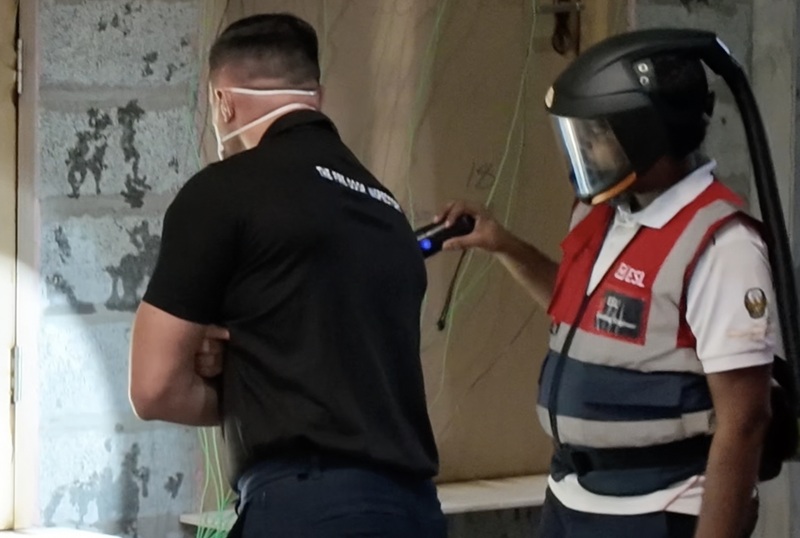
Traditionally this requires a technician to still physically visit the asset to take the required measurements. This requires a different level of skill from the technicians to take both the measurement as well as analyse and interpret the results. “The move to RCM therefore requires an investment in skill set and measurement instruments, however emerging technologies could surpass this with the fitting of permanent sensors to continually monitor equipment condition and through algorithm software analyse the received data against specification limits to identify where physical maintenance intervention is required,” says Easton.
The growing interest in IoT is not necessarily a one-stop solution. Whilst it can supply a great amount of data, it also introduces a great many solid state devices into the systems that can also fail. This is where an RCM approach together with the identification of the potential failure modes and the criticality of the asset, are essential in determining how and where emerging technologies can be applied and what system redundancy is required to protect the operation.
Benefits
The data collected is a key part of RCM to ensure they have an effective measure of the benefits of the maintenance strategy. A computer-aided FM system is the backbone to data analysis. By selecting and configuring your system, you must have a clear understanding of the outputs you require and therefore determine the inputs.
• Financial dash boards are the ultimate measure of the strategies performance
• System failure codes are key to the ongoing improvements ensuring that all failure modes are identified
• The level of sophistication of your failure coding determines the level of system root-cause analysis and that is achieved through data analysis
• Productivity measures demonstrating team efficiency and a breakdown of activity types
• Component failure rates as a measure of equipment performance but also core data in supply chain management
• Asset performance, equipment down time and energy use
• Life-cycle analysis, asset condition assessment providing key asset management data to drive Opex and Capex budgeting and targeted expenditure.
The changing trends in retail and competition from on-line shopping give continual challenges to the mall operators to reinvent themselves and their relevance as a retail environment. To increase customer foot-fall, they have to continually change and this churn factor puts increasing strain on existing assets that are critical to the customer experience and their core objectives. RCM focuses on this optimisation of system performance against lowest cost to operate and energy efficiency.
“Nonetheless, other strategies based on emerging technologies are rapidly finding their way into the FM industry and I believe that over the next couple of years maintenance and FM in general will see a complete transformation. Traditional FM companies will evolve from being 'service providers’ to become ‘solution providers’ and advisors to customers in driving strategic decisions based on data and technology,” sums up Holsters.